The Architecture of Corporate Mobility: A Strategic Guide to Optimal Business Lodging
In the competitive landscape of institutional procurement and executive talent retention, the selection of temporary housing has evolved into a strategic discipline. No longer is it merely a question of proximity to an office or the prestige of a hotel lobby; the modern landscape of corporate mobility demands a synthesis of operational efficiency, traveler well-being, and rigorous risk management. As companies navigate the complexities of a 2026 global economy, finding the best corporate lodging options requires looking past superficial amenities to the underlying structural value each model provides.
The stakes are high. For a project team deployed for a three-month technical installation, the wrong lodging choice can lead to burnout, decreased productivity, and high turnover. For a C-suite executive on a high-stakes roadshow, a lack of seamless connectivity and support can jeopardize a merger. The challenge for today’s travel managers and procurement officers is that the market has fragmented into a dizzying array of “hybrid” solutions—standard hotels, extended-stay properties, managed corporate apartments, and peer-to-peer platforms—each claiming to be the definitive answer to business travel needs.
This article serves as a deep-dive reference into that fragmented landscape. We will examine the historical shifts that moved lodging from a perk to a procurement category, the mental models used by top-tier travel managers to evaluate value, and the granular logistics that separate a functional lodging program from a truly optimized one. By the end of this analysis, the objective is to provide a comprehensive framework that allows organizations to match their specific operational constraints with the lodging solutions that will best sustain their human capital.
Understanding “best corporate lodging options”.

The term “best” is a subjective descriptor often misapplied in the context of corporate travel. In a procurement environment, “best” is defined by alignment—specifically, how well a lodging option aligns with the organization’s fiscal goals, the traveler’s productivity requirements, and the firm’s legal duty of care obligations. When we speak of the best corporate lodging options, we are not discussing a singular brand or a specific luxury tier; we are discussing a portfolio of solutions tailored to different “trip personas.”
A common misunderstanding is the conflation of “corporate lodging” with “discounted hotel rooms.” While negotiated rates are a component, they are the baseline, not the ceiling. A superior lodging option for a relocation project (e.g., a fully furnished apartment with a full kitchen) is fundamentally different from the best option for a two-night sales trip (e.g., a downtown hotel with 24/7 room service and a business center). The oversimplification risk here is “policy rigidity,” where a company forces all employees into a single lodging type regardless of the stay duration or the traveler’s functional needs.
Furthermore, the “best” options in 2026 are increasingly defined by their integration into the company’s broader tech stack. A lodging provider that offers a beautiful room but cannot integrate with the company’s expense management software (like SAP Concur) or its traveler tracking system (like ISOS) creates a “hidden friction” cost. This friction manual receipt entry, lack of visibility during a crisis, and fragmented reporting often outweigh any marginal savings on the nightly rate.
The Systemic Evolution of Business Accommodation
To appreciate the current complexity of the lodging market, one must understand how we arrived here. Historically, business travel was an executive privilege, and lodging was largely handled through “hotel directories,” thick, printed books where travel agents booked rooms based on brand reputation and loyalty.
The Era of Brand Standardization (1980s – 2000s)
This period was defined by the rise of the “flagged” hotel. Chains like Marriott, Hilton, and Hyatt standardized the experience. A “business room” meant a desk, a telephone, and reliable coffee. For the traveler, the value was predictability; for the corporation, the value was the ability to negotiate volume discounts across a national or global footprint.
The Rise of the Extended Stay and “Third Space” (2010s – 2022)
As projects became more global and technical, the “stay duration” increased. The industry responded with the extended-stay hotel (e.g., Residence Inn, Homewood Suites). These properties bridged the gap between a cramped hotel room and an apartment. Simultaneously, the “bleisure” trend began to emerge, where travelers sought environments that felt less institutional.
The Post-Hybrid Era (2023 – 2026)
We are currently in a phase of Deep Hybridization. With 80% of the workforce operating in hybrid or remote capacities, “business travel” has changed. It is no longer just about visiting clients; it is about “internal travel”—bringing remote teams together for culture-building or deep-work sprints. This has given rise to a demand for lodging that supports collaboration: properties with larger common areas, “work-from-hotel” suites with ergonomic setups, and an emphasis on wellness amenities that combat the isolation of remote work.
Conceptual Frameworks and Procurement Mental Models
When evaluating the best corporate lodging options, procurement leaders use specific mental models to move beyond the price-per-night metric.
1. The Total Cost of Lodging (TCOL)

Similar to “Total Cost of Ownership” in manufacturing, TCOL accounts for:
-
Direct Rate: The negotiated nightly price.
-
Ancillary Friction: Costs for Wi-Fi, breakfast, parking, and gym access.
-
Productivity Tax: The cost of an employee spending 90 minutes a day finding a place to eat because their room lacks a kitchen, or losing an hour of sleep due to poor soundproofing.
2. The Stay-Duration Threshold
This model suggests that the optimal lodging type shifts at specific “inflection points”:
-
1–3 Nights: Traditional Hotel (Speed and service are paramount).
-
4–10 Nights: Extended-Stay Hotel (Space and “at-home” amenities start to matter).
-
11+ Nights: Corporate Apartment/Housing (Cost savings on meals and laundry, plus mental health benefits of a residential environment, become the primary drivers).
3. The “Productivity-to-Amenity” Ratio
Not all amenities are created equal. A “best” lodging option for a software engineer might prioritize high-speed, secure Wi-Fi and a quiet environment, whereas the best option for a sales executive might prioritize a central location and an impressive lobby for client meetings. Organizations must categorize their travelers by “Persona” rather than “Rank” to choose the right lodging mix.
Key Categories and Strategic Variations
The diversity of the modern market allows for precise targeting of lodging needs. Here is a breakdown of the primary categories, their trade-offs, and where they fit in a sophisticated travel plan.
1. Flagship Full-Service Hotels
These are the standard-bearers of the industry (e.g., Grand Hyatt, Marriott Marquis).
-
Trade-off: High nightly rates and expensive ancillaries, but maximum reliability and support.
-
Best for: High-ranking executives, short-duration high-stakes meetings, and large-scale conferences.
2. Extended-Stay Hotels
Properties designed for multi-night stays (e.g., Element, Staybridge Suites).
-
Trade-off: Often located in suburban “business parks” rather than city centers, but they offer kitchens and more living space.
-
Best for: Training cohorts, project-based deployments, and “bleisure” travelers.
3. Managed Corporate Apartments
Dedicated residential units leased by specialized providers (e.g., Oakwood, BridgeStreet).
-
Trade-off: Longer lead times for booking and less “on-demand” service, but significantly lower costs for stays over 30 days.
-
Best for: Relocating employees and long-term expatriate assignments.
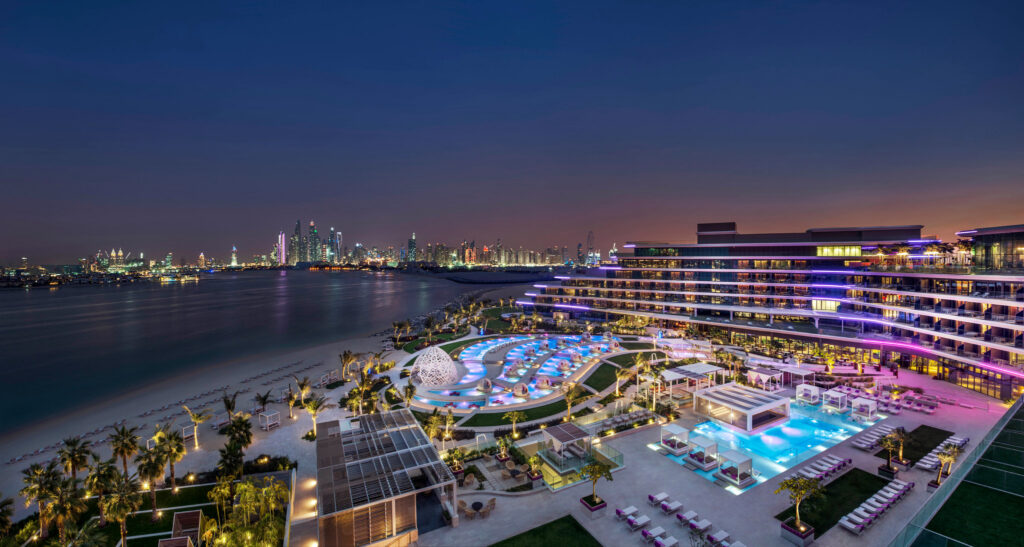
4. Lifestyle and Boutique Business Hotels
Brands like W Hotels or Edition that focus on design and culture.
-
Trade-off: Can be distracting or lack traditional “business” amenities (like large desks), but high for talent retention among younger demographics.
-
Best for: Creative industries and recruiting-heavy trips.
5. Peer-to-Peer “Business Ready” Platforms
Airbnb for Work or similar platforms.
-
Trade-off: Major Duty of Care risks and inconsistent standards, though they offer unique locations.
-
Best for: Small teams in cities where hotel capacity is severely limited.
Comparison Table: Lodging Archetypes
Realistic Decision Logic
The selection process should follow a descending hierarchy of needs:
-
Safety: Does the property meet our fire, security, and location-risk standards?
-
Duration: Does the space facilitate a human living in it for this many days?
-
Connectivity: Is the Wi-Fi enterprise-grade and secure?
-
Cost: Does the TCOL fit within the project or departmental budget?
Detailed Real-World Scenarios
To understand how the best corporate lodging options function in a dynamic environment, we must look at where they succeed—and where they fail.
Scenario A: The Technical “Cradle-to-Grave” Deployment
A team of 10 aerospace engineers is sent to a remote facility for 6 weeks.
-
The Choice: A nearby extended-stay hotel with 2-bedroom suites.
-
Why it Works: It allows for “internal team bonding” in the shared living areas while providing private bedrooms. The on-site laundry and breakfast save the company thousands in per-diem costs.
-
Failure Mode: Booking 10 individual rooms in a high-end downtown hotel. The engineers are isolated, the commute is 45 minutes each way, and the “room service only” diet leads to health issues and irritability after week three.
Scenario B: The “War Room” M&A Negotiation
Two competing companies are finalizing a merger in a neutral city over 4 days.
-
The Choice: A luxury full-service hotel with extensive meeting space and a dedicated “floor” for each company.
-
Why it Works: Security and confidentiality are the only priorities. The ability to have secure, private dining and 24/7 printing/support ensures the deal doesn’t stall due to logistical friction.
-
Second-Order Effect: The prestige of the lodging acts as a psychological “signal” of the deal’s importance to both parties.
Scenario C: The “Cultural Pivot” Offsite
A remote-first startup is bringing 100 employees to a central hub for a “Culture Week.”
-
The Choice: A boutique “lifestyle” hotel with large, open common areas and a vibrant social scene.
-
Why it Works: The lodging is the event. The environment encourages the spontaneous interactions that the remote workforce has been missing.
-
Constraint: These hotels often have smaller desks in rooms, so the company must provide dedicated external co-working space for actual work hours.
Planning, Cost, and Resource Dynamics
The financial planning for corporate lodging has moved from “Price × Nights” to a more complex variance-based model.
Direct vs. Indirect Costs
A “cheap” lodging option often hides indirect costs. If a traveler stays at a budget hotel without a gym, they may incur an expense of a $35 day pass at a local club. If the Wi-Fi is poor, they may spend $50 on a mobile hotspot. Best corporate lodging options are those where “all-in” pricing is truly all-inclusive.
Seasonal and Event-Based Variability
In many Tier-1 cities, lodging costs can triple during a major convention or sporting event. Organizations that fail to use “rate caps” or “preferred vendor contracts” often find their travel budgets decimated in a single quarter.
Estimated Cost Comparison (30-Day Stay in a Major Hub)
Tools, Strategies, and Support Systems
Selecting the right lodging is only half the battle; the other half is managing it. The infrastructure supporting the best corporate lodging options involves several key components:
-
Hotel Booking Engines (HBE): Platforms that prioritize “in-policy” hotels and show negotiated rates first.
-
Virtual Payment Cards: Generating a one-time-use credit card for a specific booking. This prevents “billback” issues where a traveler is asked for a card at check-in when the company should be paying.
-
Audit Software: Tools that automatically check if the hotel actually charged the negotiated rate (errors occur in up to 15% of corporate invoices).
-
Sustainability Dashboards: Tracking the carbon footprint of the lodging choice, which is increasingly becoming a board-level requirement.
-
Concierge Support: 24/7 human-led support for when things go wrong (e.g., a “confirmed” reservation is suddenly unavailable).
-
Direct-to-Folio Integration: Automatically pulling the itemized bill from the hotel into the expense system to eliminate manual receipt uploads.
Risk Landscape and Failure Modes
Lodging is a primary site of risk in corporate travel. Unlike an airplane, where the environment is highly controlled and regulated, a hotel is a public space with thousands of points of failure.
The Taxonomy of Lodging Risk
-
Physical Security: Poorly lit parking lots, non-functioning room locks, and a lack of secondary exits.
-
Cyber Security: “Evil Twin” Wi-Fi networks designed to steal corporate data; lack of VPN-compatible infrastructure.
-
Health & Safety: Inadequate fire suppression, poor air filtration, or location in a high-crime neighborhood.
Compounding Risks
A common failure mode is the “off-policy booking.” If an employee books a boutique hotel via a leisure site because it “looked cool,” the company has no record of where they are. If a local emergency occurs (e.g., a natural disaster or civil unrest), the company’s security team cannot find or assist them. This is a direct violation of the Duty of Care and a massive legal liability.
Governance, Maintenance, and Long-Term Adaptation
A successful lodging program requires a “Review-Adjust-Evolve” cycle.
The Layered Governance Checklist
-
Policy Audit (Quarterly): Is our $250/night cap still realistic in New York or London?
-
Vendor Review (Biannual): Did our “preferred” hotels actually provide the service levels promised? Are our employees rating them poorly?
-
Leakage Tracking: Why are people booking “outside” the system? (Usually, it’s because the internal tool is too difficult to use or the policy is too restrictive.
Adjustment Triggers
-
Cost Spikes: If lodging spend in a specific city rises 15% without a volume increase, it’s time to renegotiate.
-
Feedback Clusters: If three employees complain about the Wi-Fi at a specific hotel, that property should be “grey-listed” until the issue is resolved.
Measurement, Tracking, and Evaluation
Organizations must move from “Did we save money?” to “Did we generate value?”
Leading Indicators
-
In-Policy Booking Rate: The percentage of stays booked through authorized channels.
-
Lead Time: The average days before a stay that a booking is made (longer lead times equal better rates).
Lagging Indicators
-
Traveler NPS (Net Promoter Score): How do employees feel about the lodging provided?
-
Total Cost per Trip: Not just the room, but the meals and transport included.
Documentation Examples
-
The Lodging Scorecard: A quarterly report comparing different properties in the same city.
-
The “Stay Report”: A post-trip survey that asks: “Was the Wi-Fi fast enough for your work?” and “Did you feel safe?”
Common Misconceptions and Oversimplifications
-
“Loyalty points are a distraction.” False. Loyalty programs are a powerful tool for talent retention. A traveler who gains status via work trips gets perks that make their leisure travel better, which is a low-cost benefit for the company.
-
“Corporate housing is always cheaper than hotels.” Only if the stay is long enough to offset the “cleaning and set-up fees.” For a 5-day stay, a hotel is almost always more efficient.
-
“High-end hotels are safer.” Not necessarily. Famous luxury hotels can actually be “high-profile targets” for theft or other security issues.
-
“Employees always want the fanciest option.” Most employees actually want the easiest option. A mid-tier hotel with a 2-minute commute is often preferred over a luxury hotel with a 30-minute commute.
-
“We don’t need a lodging policy; everyone just uses their best judgment.” Judgment varies. One employee’s “best judgment” is a $1,000/night penthouse; another’s is a sketchy hostel. Policy provides the baseline of professional safety.
-
“Sustainability is just about towels on the floor.” In 2026, it’s about the hotel’s energy source, its food waste programs, and its labor practices.
Synthesis and Strategic Outlook
The best corporate lodging options are moving toward a state of “Modular Living.” We are seeing the rise of properties where the furniture can be reconfigured based on the traveler’s needs—turning a living room into a conference room or a gym into a private office. For the organization, the strategy is to move away from rigid, one-size-fits-all contracts and toward a “dynamic portfolio” approach.
Ultimately, lodging is not an expense to be minimized; it is an environment to be managed. The physical space where an employee sleeps, works, and eats while on the road is the primary determinant of that trip’s ROI. Companies that recognize this—prioritizing traveler health, digital security, and operational integration over the lowest possible nightly rate—are the ones that will build the most resilient and productive global workforces in the years to come.