The Definitive Guide to Strategic Premium Aviation: Top Business Class Options
The global aviation industry in 2026 presents a landscape where the distinction between luxury and utility has largely collapsed for the corporate traveler. Business class is no longer merely a comfortable middle ground between the austerity of economy and the exclusivity of first class; it has become the primary theater for “high-altitude productivity.” For the modern enterprise, the selection of an air carrier is a strategic decision involving human capital preservation, cognitive readiness upon arrival, and the optimization of non-billable hours.
This evolution reflects a broader shift in corporate governance. As firms move toward more rigorous “Duty of Care” standards, the physiological impact of long-haul travel has entered the spotlight. Research into circadian rhythm disruption, cabin pressure, and atmospheric humidity has transformed the cabin from a place of passive transit into a controlled environment for recovery. Consequently, identifying the most effective travel solutions requires a departure from superficial amenities—champagne brands and amenity kit designers—toward a structural analysis of the flight experience.
The complexity of the current market is compounded by the “unbundling” of premium services and the rise of “business-plus” configurations. Organizations must now navigate a fragmented array of seat architectures, connectivity tiers, and ground-service integrations. This article serves as a definitive reference for those tasked with architecting travel programs that balance fiscal discipline with the physical and mental demands of global commerce, offering a deep dive into the systemic variables that define contemporary premium aviation.
Understanding “top business class options”.
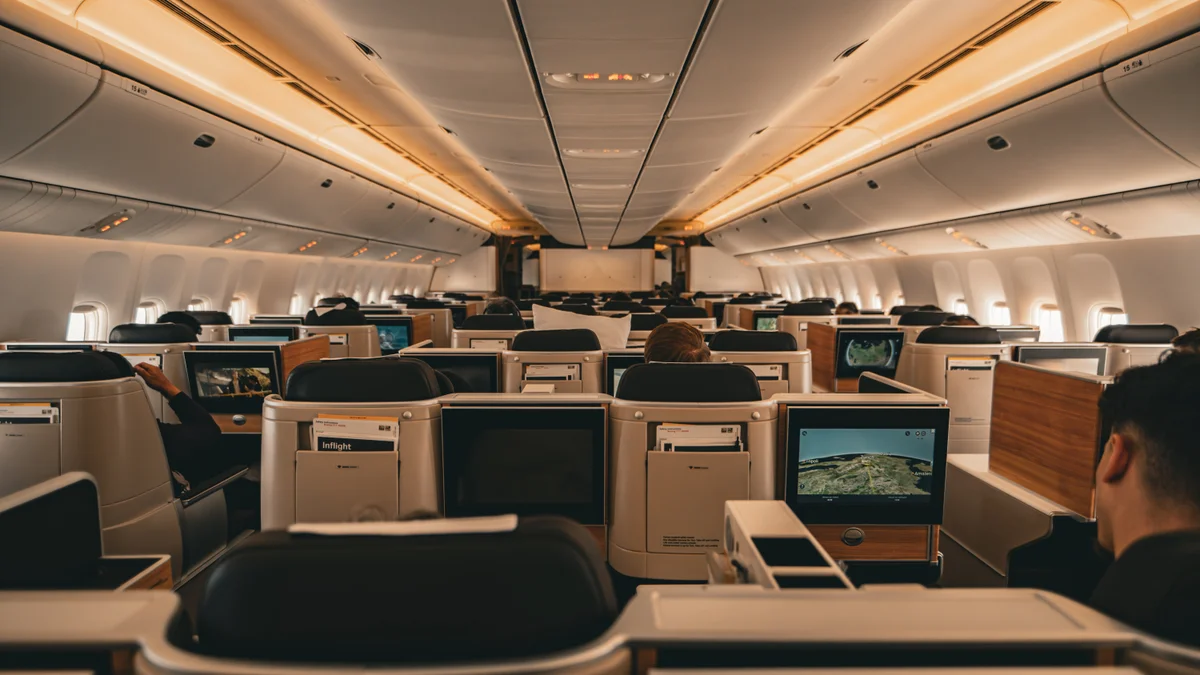
To effectively evaluate top business-class options, one must first dismantle the consumer-grade marketing that dominates the sector. In a professional context, the “best” option is not defined by luxury, but by the alignment of the carrier’s hard and soft products with the traveler’s specific “mission profile.” A flight that offers a superior sleeping surface might be the optimal choice for an overnight trans-Atlantic leg, but that same aircraft might be suboptimal for a daytime trans-Pacific flight where high-speed, low-latency connectivity is the primary requirement for a working executive.
Common misunderstandings often arise from the reliance on legacy rankings, which fail to account for “sub-fleet variability.” It is a frequent oversimplification to assume that a five-star airline provides a consistent experience across its entire network. In reality, an airline might deploy its latest “suite” product on its flagship London-New York route while using ten-year-old, angled-flat seats on its secondary routes. Procurement leads must therefore look past the brand and analyze the specific aircraft type and seat map assigned to the route in question.
Furthermore, the risk of oversimplification extends to the “soft product.” A carrier’s catering or service style is often dismissed as a peripheral luxury, yet it plays a critical role in metabolic health during travel. The ability to dine “on demand” rather than according to a fixed schedule allows a traveler to sync their digestive system with their destination time zone immediately, a subtle but significant factor in reducing jet lag and ensuring cognitive sharpness for a post-flight negotiation.
The Systemic Evolution of the Premium Cabin
The trajectory of business class has moved from “improved seating” to “total environment management.” Historically, business class was introduced in the late 1970s as a response to the “First Class” being priced out of reach for many companies, while “Economy” became too crowded for productive work.
The Era of the Cradle Seat (1980s – 1990s)
The initial iteration focused on legroom and recline. Seats were wider but did not go flat. The value proposition was physical space and a quieter cabin.
The Lie-Flat Revolution (2000s – 2015)
British Airways famously introduced the first fully flat bed in business class in 2000, triggering an industry-wide arms race. The focus shifted to sleep quality. This era also saw the rise of the “1-2-1” configuration, ensuring that every passenger has direct aisle access, eliminating the “climb-over” maneuver that plagued previous generations.
The Suite and “Apartment” Phase (2016 – 2026)
We are currently in the era of privacy and personalization. With the introduction of Qatar Airways’ Qsuite and the Delta One Suite, sliding doors have become the new gold standard. This shift treats the seat not just as a bed, but as a private office. Simultaneously, the focus has expanded to “wellness tech”—lighting systems that mimic the sun’s progression and advanced filtration that reduces airborne pathogens.
Conceptual Frameworks and Procurement Mental Models
When organizations evaluate topbusiness-classs options, they should apply specific mental models to move beyond subjective preference.
1. The Circadian-Alignment Model
This framework prioritizes carriers based on their ability to facilitate time-zone shifting. Features such as “dine-on-demand,” advanced LED mood lighting, and lower cabin altitudes (e.g., 6,000 ft on a Boeing 787 vs. 8,000 ft on older aircraft) are weighted higher than entertainment or meal quality. The goal is the minimization of “Post-Arrival Latency”—the time it takes for an executive to become 100% productive.
2. The Total Value of Time (TVT)
This model calculates the ROI of a business class seat by factoring in the “billable hour” value of the traveler. If a $5,000 business class seat allows a partner at a law firm to work for 8 hours and arrive ready for a meeting, whereas a $1,200 premium economy seat results in 8 hours of lost work and 12 hours of recovery time, the business class seat is the more fiscally responsible choice.
3. The Connectivity-Continuity Framework
For certain roles, the airplane must function as a seamless extension of the ground office. This framework evaluates carriers solely on their Wi-Fi architecture (L-band vs. Ka-band vs. Ku-band satellite tech) and power supply stability. A carrier with “free” but slow Wi-Fi is ranked lower than one with paid, high-speed, “gate-to-gate” connectivity.
Key Categories of Business Class Configurations
The market is currently stratified into four primary seat architectures, each with distinct trade-offs for the corporate traveler.
1. The Closed Suite (e.g., Qatar Qsuite, ANA The Room)
-
Trade-off: Offers maximum privacy and a large working surface, but can feel claustrophobic to some and adds weight/cost to the ticket.
-
Best for: Executives handling highly sensitive data or those requiring uninterrupted sleep.
2. Reverse Herringbone (e.g., Cathay Pacific, American Airlines)
-
Trade-off: Seats are angled toward the window, offering good privacy and aisle access, but footwells can be narrow, hindering side-sleepers.
-
Best for: Solo travelers who prioritize a view and a sense of openness.
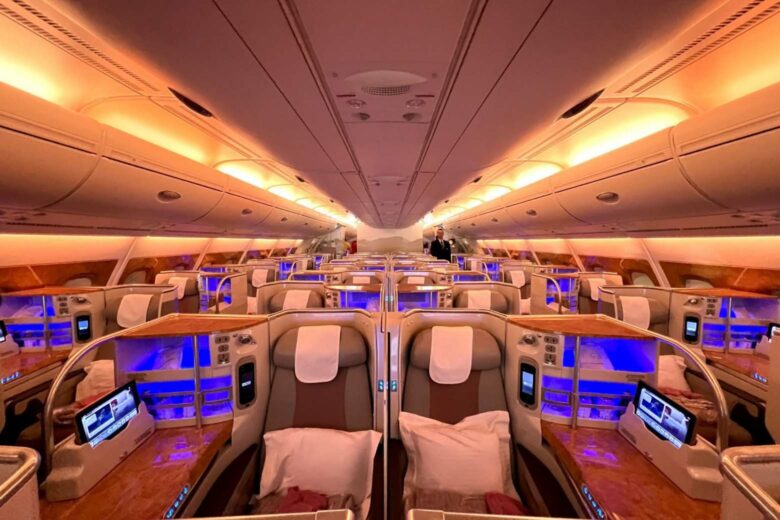
3. Staggered Configuration (e.g., Emirates, Swiss)
-
Trade-off: Every other seat is closer to the aisle, and seats are aligned straight. It offers excellent storage but variable privacy depending on whether the seat is “protected” by the console.
-
Best for: Organizations looking for consistent, predictable layouts across a fleet.
4. Apex Suites (e.g., Japan Airlines, Oman Air)
-
Trade-off: A 2-2-2 layout that surprisingly offers direct aisle access for everyone through a clever bypass lane. It provides a massive amount of personal space but is rare and expensive to maintain.
-
Best for: Ultra-long-haul flights where legroom is the primary concern.
Comparison Table: Premium Cabin Architectures
| Feature | Closed Suite | Reverse Herringbone | Staggered | Apex Suite |
| Privacy Level | Maximum (Door) | High | Moderate | High |
| Storage Space | High | Moderate | High | Maximum |
| Bed Width | Wide | Tapered at the feet | Consistent | Wide |
| Aisle Access | 100% Direct | 100% Direct | 100% Direct | 100% Direct |
| Typical Aircraft | A350, B777 | B787, A330 | B777, A380 | B787, B777 |
Detailed Real-World Scenarios
Scenario A: The “Red-Eye” Trans-Atlantic Sprint
A team of consultants departs NYC at 9 PM, arriving in London at 9 AM for a 1 PM board meeting.
-
Constraints: Maximum sleep in a short window (approx. 6 hours).
-
Optimal Choice: A carrier with a “sleeper service” that provides full dining in the lounge so the passenger can go directly to sleep upon boarding.
-
Failure Mode: Selecting a carrier with a long, multi-course meal service that keeps the lights on for the first two hours of flight.
Scenario B: The Trans-Pacific “Flying Office”
A CTO travels from San Francisco to Singapore (17 hours).
-
Constraints: Must stay synchronized with US-based dev teams for the first half of the flight and sleep during the second half.
-
Optimal Choice: A carrier with Starlink-grade connectivity and a “suite” with a wide desk surface.
-
Second-Order Effect: The traveler completes a full work cycle in the air, meaning they can afford to take a half-day of rest upon arrival without falling behind.
Scenario C: The “Multi-Stop” Emerging Market Roadshow
A regional director visits three cities in five days across Africa or Southeast Asia.
-
Constraints: Variable ground infrastructure and high physical fatigue.
-
Optimal Choice: Prioritizing carriers with superior lounge networks that offer shower facilities and quiet zones to bridge the gap between flights.
Planning, Cost Dynamics, and Resource Allocation
The financial management of premium travel has shifted from “transactional” to “relational.”
Direct vs. Indirect Costs
The sticker price of a business class ticket is only the beginning. Organizations must account for:
-
Change Fees: High-flexibility tickets are often 30-50% more expensive but prevent the total loss of the fare during volatile negotiations.
-
Ground Transportation: Many top business class options include chauffeur services, which can save $200-$400 per round trip in airport transfers.
-
Lounge Productivity: The ability to use a secure, quiet lounge for 4 hours during a layover is a direct productivity gain.
Range-Based Pricing (Standard vs. Dynamic)
| Route Type | Average Fare (Discounted) | Average Fare (Flexible) | Miles/Points Value |
| Trans-Atlantic | $3,500 – $6,000 | $8,000 – $12,000 | 120k – 200k |
| Trans-Pacific | $5,000 – $9,000 | $12,000 – $18,000 | 160k – 250k |
| Europe-Asia | $4,000 – $7,500 | $9,000 – $14,000 | 140k – 220k |
Tools, Strategies, and Support Ecosystems
-
ExpertFlyer/SeatGuru Integration: Moving beyond the airline’s own site to see the specific aircraft tail number and seat version.
-
Corporate Booking Tools (OBTs): Configuring tools to prioritize “Direct Aisle Access” and “Fully Flat” filters over price alone.
-
Soft-Product Tracking: Maintaining a database of which carriers offer “Dine on Demand” vs. fixed schedules for specific routes.
-
Loyalty Arbitrage: Using corporate “ghost” accounts to accrue miles that can be used for upgrades, effectively lowering the cost of the premium cabin.
-
Inter-Line Connectivity Agreements: Evaluating how carriers handle “unprotected” transfers during delays—crucial for high-stakes arrivals.
-
Sustainability Dashboards: Integrating SAF (Sustainable Aviation Fuel) credits into the booking process for ESG compliance.
Risk Landscape and Failure Modes
The “Equipment Swap” Risk
This is the most common failure in premium travel. A traveler books a flagship suite, but due to a mechanical issue, the airline swaps the aircraft for an older version with 2-2-2 seating.
-
Mitigation: Strategic procurement involves selecting carriers with “sub-fleet homogeneity”—those whose entire long-haul fleet has been retrofitted.
The “Connectivity Blackout”
Satellite coverage often has “dead zones,” particularly over the North Pole or specific oceans.
-
Mitigation: Consulting coverage maps for specific flight paths (e.g., Ka-band vs. Ku-band) if a working flight is mandatory.
The “Hub Congestion” Factor
A superior seat on a carrier that hubs through a notoriously congested airport (e.g., LHR or FRA) can be a net loss if a 60-minute delay leads to a missed connection and a 12-hour wait.
Governance and Long-Term Program Adaptation
An effective travel program must move from a “set-and-forget” policy to a dynamic review cycle.
The Quarterly Quality Audit
Instead of just reviewing spend, organizations should review “Traveler Net Promoter Scores” (NPS). Did the traveler arrive in a state to perform? If a specific carrier has a 20% “broken seat” report rate, they should be removed from the preferred list regardless of price.
Layered Policy Checklist
-
Duration Trigger: At what flight length (e.g., 6 hours or 8 hours) does Business Class become the default?
-
Connection Limit: Does the policy allow for a $500 premium to take a direct flight over a connection?
-
Amenity Tiering: Does the policy differentiate between “Regional Business Class” (often just a blocked middle seat) and “International Business Class”?
Measurement, Tracking, and Evaluation
Organizations should track Leading Indicators (Predictive) and Lagging Indicators (Outcome-based).
-
Leading: Average cabin humidity of the booked fleet; percentage of fleet with direct aisle access.
-
Lagging: Days of “recovery leave” taken post-trip; health-related absenteeism after international roadshows.
Documentation Examples
-
The “Cognitive Readiness” Survey: A 3-question survey sent to executives 4 hours after landing.
-
The Fleet Homogeneity Report: A quarterly audit of which “preferred” carriers are actually delivering their advertised flagship product.
Common Misconceptions and Oversimplifications
-
“Business class is just about the food.” Food is a distraction; the core product is the sleep surface and the air quality.
-
“Newer planes are always better.” A retrofitted 10-year-old Boeing 777 can have a better seat than a brand-new 787 if the airline invested in the cabin.
-
“Points are a free lunch.” Managing a points portfolio for a corporation has significant “opportunity costs” in administrative labor.
-
“All 1-2-1 layouts are equal.” Some staggered layouts have tiny footwells that make sleeping nearly impossible for taller travelers.
-
“Direct is always faster.” A direct flight on a carrier with poor schedules might land at 11 PM, while a connection on a better carrier might land at 8 AM, ready for the day.
-
“First class is dead.” For ultra-high-net-worth individuals or the C-suite on high-risk missions, the privacy of First Class remains a security requirement, not a luxury.
Ethical and Contextual Considerations
The selection of top business class options must increasingly account for the environmental footprint. Business class seats, due to their physical footprint and weight, have a significantly higher carbon cost per passenger than economy seats. Strategic organizations are now balancing “Duty of Care” (health) with “Duty to Planet” (sustainability) by investing in carriers with the youngest, most fuel-efficient fleets and those actively participating in SAF scaling.
Synthesis and Strategic Outlook
The future of business class lies in “Hyper-Personalization.” By 2028, we expect to see cabins where the lighting, humidity, and even seat firmness are pre-set based on the traveler’s biometric profile stored in their loyalty app. The distinction between carriers will move from the “hardware” of the seat to the “software” of the biosecurity and wellness environment.
For the modern organization, the strategic judgment remains clear: air travel is a physiological tax on human capital. The objective is not to find the cheapest way to move a body across a map, but the most efficient way to maintain the integrity of an intellect across time zones. Those who view travel as a commodity will face the hidden costs of burnout and missed opportunities; those who view it as a managed environment will find their global operations more resilient and their leadership more agile.