How to Avoid Business Travel Fatigue: A Strategic 2026 Reference Guide
The professional landscape of 2026 presents a paradox: despite the sophistication of digital collaboration tools, the requirement for physical presence in global commerce remains unyielding. Yet, the biological cost of this “presence” is often underestimated by both organizations and individuals. Business travel fatigue is not merely a transient feeling of tiredness; it is a complex physiological and cognitive state resulting from the cumulative stressors of transit, disrupted circadian rhythms, and high-stakes performance requirements in unfamiliar environments.
When an individual crosses multiple time zones to engage in high-value negotiations or technical oversight, they are operating at a metabolic deficit. The traditional corporate approach has been to treat this as a resilience challenge, a test of “grit.” However, recent longitudinal studies into executive burnout suggest that unmanaged transit stress is a primary driver of attrition among high-performing talent. To address this, we must move away from reactive recovery and toward a systemic architecture of preservation.
The following analysis deconstructs the mechanisms of transit-related exhaustion. It provides a definitive blueprint for organizations and frequent travelers who recognize that peak performance is a byproduct of physiological stability. By examining the structural, biological, and psychological variables involved in global mobility, we can establish a framework that allows for geographic agility without the corresponding erosion of human capital.
Understanding “how to avoid business travel fatigue.”

The pursuit of how to avoid business travel fatigue requires a shift from viewing travel as a logistical event to viewing it as a biological intervention. A common misunderstanding in corporate travel management is the conflation of “jet lag” with “travel fatigue.” While jet lag is a chronobiological misalignment specifically related to crossing time zones, travel fatigue is a broader syndrome encompassing the cumulative “wear and tear” of the travel process itself—from the cognitive load of navigating foreign infrastructure to the physical toll of prolonged sedentary posture and poor air quality in transit cabins.
Oversimplification in this sector often leads to the “Resilience Fallacy,” where travelers believe that premium cabin upgrades or five-star hotels are sufficient countermeasures. While these amenities reduce immediate discomfort, they do not address the systemic disruption of the autonomic nervous system. A traveler who flies first class but ignores sleep hygiene, nutritional stability, and cognitive pacing will still experience significant performance degradation. Strategic fatigue avoidance must therefore be “barbelled”: it requires both high-end logistical support and disciplined personal habits.
From a multi-perspective view, fatigue avoidance is a shared responsibility. For the organization, it involves creating policies that prioritize “Metabolic Buffer” over “Calendar Density.” For the individual, it requires a mastery of “Environmental Control,” the ability to curate a consistent micro-environment (sleep conditions, hydration, noise levels) regardless of their geographic coordinates. When these two perspectives align, the traveler moves from a state of “surviving the trip” to a state of “owning the mission.”
Deep Contextual Background: The Evolution of Transit Stress
The history of professional mobility reveals a shift from physical exertion to cognitive overload. In the mid-20th century, travel was characterized by significant physical discomfort but slower paces and longer “acclimatization” periods. Executives traveling by ship or slow propeller aircraft had several days to adjust to new environments, effectively baking recovery time into the journey itself.
The “Jet Age” introduced a radical compression of time and space. For the first time, an individual could leave London and arrive in New York in a matter of hours, demanding immediate cognitive high-performance. This “temporal violence” created a new class of professional stress. By the early 2000s, the “road warrior” culture celebrated the ability to fly across the world for a single dinner, a practice that we now understand to be biologically unsustainable and fiscally inefficient when factoring in the second-order costs of executive burnout.
In 2026, we are seeing the rise of “Intentional Mobility.” Post-pandemic awareness of health and the increasing cost of carbon have forced a reassessment. Travel is now less frequent but higher in intensity. The modern focus is not just on getting to the destination, but on arriving in a “readiness state” that justifies the expense and the environmental impact of the journey.
Conceptual Frameworks and Mental Models
To operationalize fatigue avoidance, travelers and managers should adopt these three primary mental models.
1. The Metabolic Budgeting Model
This framework treats the traveler’s energy as a finite currency. Every event—a security line, a time zone shift, a social dinner—is an “expense.” Fatigue avoidance is the process of minimizing “low-value expenses” (logistical friction) to save capital for “high-value investments” (the actual business meeting).
2. The Micro-Environmental Consistency Framework
This model posits that the human body thrives on predictability. The objective is to make the hotel room, the airplane seat, and the transit lounge as similar to the home environment as possible in terms of sensory input. This “Environmental Anchoring” reduces the amygdala’s stress response to being in a foreign setting.
3. The “Phase-Shift” Calculus
This is a mathematical approach to time zone management. It determines whether a traveler should attempt to “anchor” to their home time zone (for short trips under 48 hours) or “aggressive phase-shift” to the destination (for longer stays). Misapplying this choice is the leading cause of chronic insomnia among frequent travelers.
Key Categories of Fatigue and Strategic Trade-offs
Managing fatigue involves addressing different “silos” of exhaustion, each with its own levers and costs.
| Fatigue Category | Primary Stressor | Countermeasure | Strategic Trade-off |
| Chronobiological | Time zone crossing | Light therapy / Melatonin | Speed of arrival vs. Readiness |
| Sensory/Cognitive | Noise, crowds, logistics | Noise-canceling / Concierge | Privacy vs. Direct cost |
| Physical/Metabolic | Cabin air, sedentary time | Hydration / Movement | Efficiency vs. Health |
| Social/Emotional | Family separation / Isolation | Digital connectivity | Connectivity vs. Presence |
| Environmental | Air quality / Water changes | Filtration / Probiotics | Flexibility vs. Control |
Decision Logic: The “High-Touch” vs. “High-Redundancy” Approach
For critical missions, organizations should favor “High-Touch” logistics—using local drivers and greeters to eliminate the cognitive load of navigation. For routine travel, “High-Redundancy” (multiple flight options and flexible booking) allows the traveler to adjust their schedule based on their immediate energy levels.
Detailed Real-World Scenarios
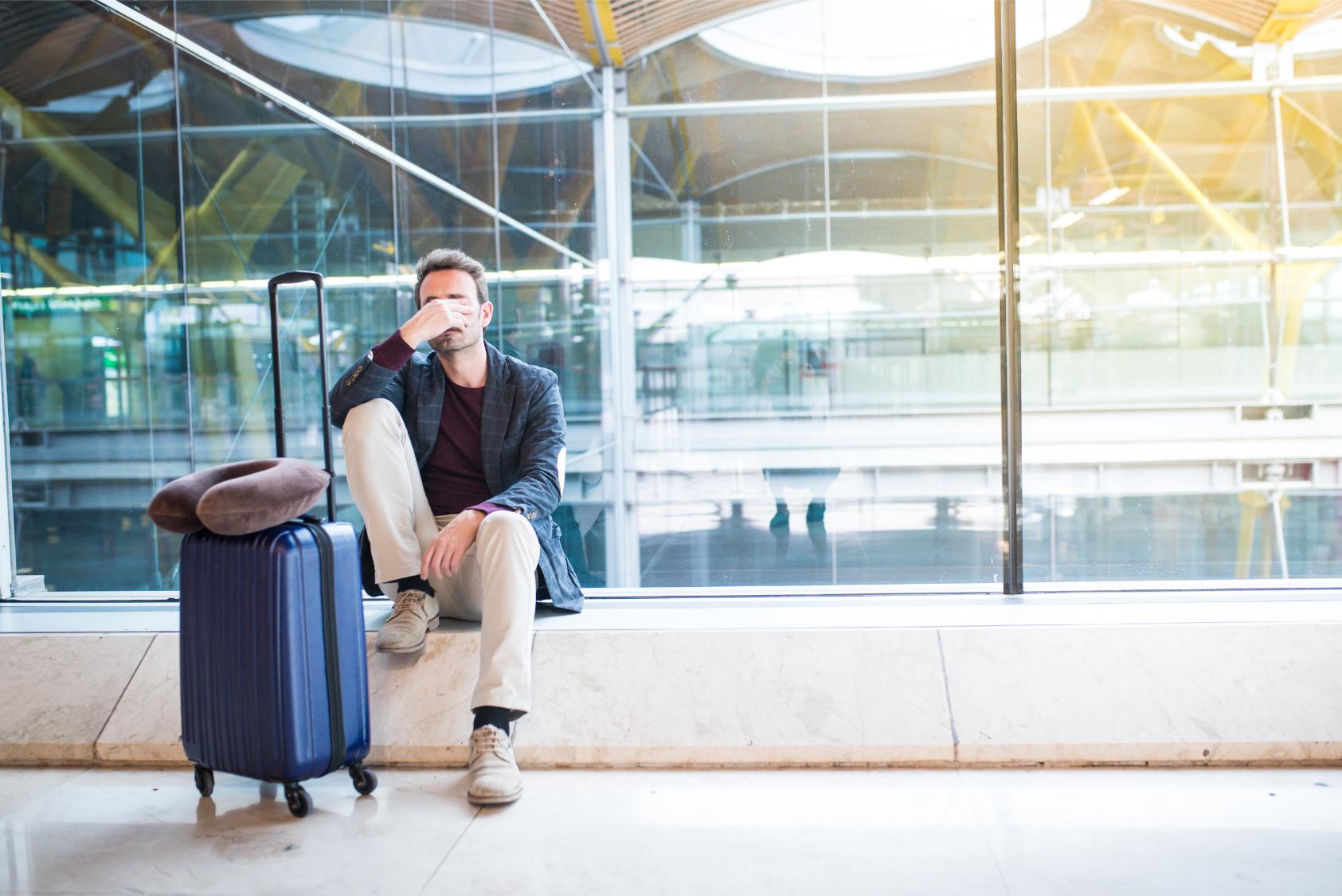
Scenario A: The Trans-Pacific “Sprint”
An executive must fly from San Francisco to Tokyo for a 24-hour board meeting.
-
The Conflict: Aggressively adjusting to Tokyo time for a one-day stay.
-
The Strategy: The “Home Anchor.” The traveler stays on PST, schedules meetings for the Tokyo morning (their home evening), and uses high-intensity blue light during their “home day” hours to suppress sleep.
-
Outcome: The traveler avoids the “double-crash” of adjusting to Tokyo and then immediately readjusting to SF.
Scenario B: The Technical Rollout in Multiple Cities
A lead engineer is visiting five European offices in ten days.
-
The Conflict: The “Packing Fatigue” and the friction of five different check-in/check-out cycles.
-
The Strategy: The “Hub and Spoke” residence. The engineer stays in a central city (e.g., Frankfurt) for the full ten days and uses high-speed rail for day-trips to other offices.
-
Outcome: The removal ofunpackingng friction” provides an additional 90 minutes of sleep per night and maintains environmental consistency.
Planning, Cost, and Resource Dynamics
The “price” of fatigue avoidance is often visible, while the “cost” of fatigue is hidden.
Indirect Costs of Fatigue
-
Cognitive Errors: A fatigued executive is more likely to concede on key contract points or miss subtle social cues in negotiation.
-
Health Attrition: Increased medical claims and absenteeism post-trip.
-
Retention Loss: Frequent travelers often cite “travel burnout” as their primary reason for seeking less mobile, and potentially less impactful, roles.
Resource Allocation Table
| Strategy Level | Direct Cost Increase | Resource Focus | ROI Metric |
| Tactical | 5-10% | Supplements, hydration, apps | Subjective energy score |
| Operational | 20-30% | Direct flights, premium lodging | Incident/Error rate |
| Strategic | 50%+ | Concierge, recovery days, HEAT training | Long-term retention |
Tools, Strategies, and Support Systems
To effectively execute a fatigue-avoidance plan, the following “Support Stack” is recommended:
-
Biometric Monitoring: Using wearable devices to track Heart Rate Variability (HRV) as a leading indicator of autonomic stress.
-
Light Therapy Devices: Utilizing specific lux-intensity lamps to advance or delay the circadian clock scientifically.
-
Noise/Light Sanitation: High-fidelity earplugs and 100% blackout masks to ensure “Deep Sleep” regardless of hotel quality.
-
Hydration Protocols: Moving beyond water to electrolyte-dense solutions that compensate for the specific humidity-drop in aircraft cabins.
-
Micro-Movement Routines: 10-minute isometric exercise sequences designed for use in seats to prevent lymphatic pooling.
-
“Dark” Days: Policy-mandated days of zero-communication following international travel to allow for neurological “cooling.”
-
Digital Concierge Services: Outsourcing the “logistical noise” of restaurant bookings, transit changes, and visa issues.
-
Nutritional Consistency: Pre-ordering specific meals to avoid the “Glucose Rollercoaster” of processed airport food.
Risk Landscape and Failure Modes
The “Fatigue Spiral” occurs when travelers try to mask exhaustion with temporary stimulants, leading to a compounding of risk.
1. The Stimulant-Sedative Loop
Travelers use caffeine to stay awake during the destination day and alcohol or medication to sleep at night. This “Chemical Crutch” prevents actual REM sleep, leading to a “Sleep Debt” that can take weeks to clear.
2. The “Hero” Complex
The tendency for travelers to “push through” symptoms of illness or extreme exhaustion to prove commitment. This failure mode often leads to a major health event or a significant professional blunder.
3. The Information Security Risk
Fatigued individuals are significantly more likely to lose devices, forget to use VPNs, or fall for social engineering or phishing attempts. Fatigue is a primary vulnerability in a company’s cyber-perimeter.
Governance, Maintenance, and Long-Term Adaptation
Organizations must move from “guidelines” to “governance” to protect their traveling workforce.
The “Metabolic Audit”
Companies should conduct an annual review of their travel data—not just for cost, but for “Stress Density.” If a specific route or frequency is consistently associated with employee turnover or health issues, the route must be re-engineered.
Layered Fatigue-Protection Checklist
-
Pre-Trip: Has the traveler had 48 hours of “home stability” before departure?
-
In-Transit: Is the layover duration sufficient for a “de-compression” walk?
-
Post-Trip: Is there a mandated 24-hour “no-meeting” window upon return?
Measurement, Tracking, and Evaluation
You cannot manage what you do not measure. Effective programs use a mix of signals:
-
Leading Indicators: Sleep duration (via wearables), resting heart rate, and HRV.
-
Lagging Indicators: Post-trip productivity (measured by output metrics), sick days taken after travel, and self-reported “Recovery Time.”
-
Qualitative Signals: The “Mood Index” of the traveler upon return.
Documentation Examples
-
The Fatigue Log: A simple 1-10 daily score of cognitive clarity.
-
The Logistic Friction Report: Identifying specific airports or hotels that caused the most stress.
Common Misconceptions and Oversimplifications
-
“Alcohol helps you sleep on planes.” It actually fragments sleep and increases dehydration, worsening jet lag.
-
“You can ‘catch up’ on sleep on the weekend.” Sleep debt is not a linear bank account; neurological recovery requires consistent cycles.
-
“Elite travelers don’t get tired.” Even the most experienced travelers experience physiological decline; they just have better systems for hiding it.
-
“Direct flights are always better.” A layover with a shower and a real meal can sometimes be more restorative than a 16-hour non-stop flight.
-
“Exercise should be intense.” Intense cardio immediately after a long flight can spike cortisol and prevent sleep. Stretching and light movement are superior.
-
“Eating on the plane is necessary.” Fasting during transit can actually help reset the circadian clock more quickly.
-
“Coffee is for energy.” Caffeine is a “masking agent” that blocks adenosine; it doesn’t provide energy, it just prevents you from feeling the need for it.
-
“The hotel gym is the priority.” Dark, quiet sleep is 10x more impactful for fatigue avoidance than a 30-minute workout.
Ethical, Practical, and Contextual Considerations
The ethics of travel fatigue center on the “Duty of Care.” If an organization knows that a specific travel schedule increases the risk of a car accident (due to micro-sleep) or a health crisis, they are ethically—and increasingly legally—obligated to intervene. Practically, this means recognizing that “equality” in travel is not “equity.” A 25-year-old traveler and a 55-year-old traveler have different metabolic recovery rates and require different levels of support to achieve the same business outcome.
Conclusion: The Synthesis of Performance and Health
The mastery of how to avoid business travel fatigue is the ultimate “competitive advantage” in the global economy. As the world becomes more connected, the ability to arrive in a foreign city with your cognitive and physical faculties intact is what separates the high-impact professional from the merely “present” one.
This requires a cultural shift: seeing rest as a “performance requirement” rather than a “luxury.” By integrating biometric data, disciplined environmental control, and institutional support, we can build a model of mobility that is both hyper-productive and deeply humane. The future of business travel is not about how many miles you fly, but about the quality of the person who steps off the plane.