Best Bleisure Destinations United States: The 2026 Professional’s Guide
In the fluctuating professional landscape of 2026, the traditional boundary between corporate obligation and personal exploration has dissolved into a sophisticated hybrid known as “blended travel.” This shift is not merely a byproduct of remote work flexibility; it is a calculated response to the rising “Total Cost of Travel.” As airfares and lodging rates stabilize at historic highs, high-output professionals are increasingly viewing every domestic business trip as an opportunity for “temporal arbitrage,” leveraging company-funded transit to anchor a multi-day personal stay.
Identifying the best bleisure destinations in the United States requires a departure from traditional tourism metrics. A premier bleisure node is defined by its “Seamless Transition Capability,y” the ease with which a traveler can move from a high-stakes boardroom or convention center to a culturally dense or restorative environment without the friction of secondary transit. In this context, cities like San Diego, Austin, and Philadelphia have emerged as powerhouses, outperforming larger hubs by offering compact, walkable “innovation districts” situated directly adjacent to historic or natural landmarks.
The current economic cycle has also birthed a new category of “Second-Tier Titans.” Cities such as Charlotte, North Carolina, and Salt Lake City, Utah, are no longer just regional financial or logistics hubs. They have invested heavily in “work-enabled hospitality,” where luxury hotels are designed with integrated high-focus co-working suites and proximity to outdoor “Blue and Green Spaces.” For the modern professional, these destinations offer a higher “Return on Experience” (RoX) by reducing the cognitive load of navigating massive, congested metropolitan areas.
This pillar article serves as a definitive audit of the American bleisure landscape in 2026. We will dissect the strategic frameworks for optimizing blended itineraries, analyze the risk of “policy creep” in corporate travel departments, and provide an exhaustive breakdown of the destinations that currently define the pinnacle of work-life integration.
Understanding “best bleisure destinations united states.”
To categorize the best bleisure destinations united states is to recognize that “bleisure” is a spectrum, not a binary state. The market currently distinguishes between “Transient Bleisure” (adding two days to a conference) and “The Working Vacation” (fully integrating 40 hours of work into a week-long stay at a resort). The primary misunderstanding in this space is the belief that any city with a good park and a convention center qualifies. In reality, a true bleisure destination must possess “Infrastructure Sincerity,” a genuine commitment to supporting the specific needs of a person who is simultaneously a high-level executive and a curious traveler.
A multi-perspective view reveals that the efficacy of these destinations is often industry-dependent. A fintech professional will find the networking-to-leisure ratio of Miami’s Brickell district superior to almost anywhere else in the world, while a renewable energy consultant may find the “Silicon Slopes” of Utah more conducive to their specific professional and personal goals. The risk of oversimplification lies in ignoring the “Leisure Half-Life”—the speed at which a city’s leisure options become exhausting rather than restorative.
In 2026, the distinction between a “top tier” and a “middle tier” destination often comes down to the “Airport-to-Aperitivo” metric. This measures the total time from landing to being fully immersed in a leisure activity. Hubs like San Diego, where the airport is minutes from the Gaslamp Quarter and the waterfront, represent the gold standard. Conversely, destinations where the business district is a 60-minute commute from the “fun” areas are seeing a decline in bleisure desirability, as the time cost of the transition outweighs the benefit of the extension.
Deep Contextual Background: The Industrialization of Leisure
The American business trip was historically a “zero-sum” endeavor. Companies sought maximum efficiency, which usually meant “fly in, meet, fly out.” The 2020–2024 period broke this model, but 2025–2026 has seen its formal industrialization.
The Shift from “Perk” to “Requirement”
Previously, “bleisure” was a hush-hush practice, often involving creative expense reporting. Today, it is a key lever in Talent Acquisition and Retention. Corporate travel managers now use bleisure-friendly policies as “non-cash compensation.” By allowing employees to book Friday-to-Monday stays with the company covering the primary airfare, firms are effectively providing a subsidized vacation that increases employee “Total Life Satisfaction.”
The Infrastructure Evolution
Hospitality brands have responded by redesigning the “Business Hotel.” The 2026 standard for a bleisure-ready property includes:
-
Dual-Purpose Suites: Desks that are ergonomically sound but can be tucked away to “turn off” the work vibe.
-
Hyper-Local Concierge AI: Systems that don’t just recommend a restaurant, but find one with “guaranteed quiet zones” for a 5:00 PM catch-up call before dinner.
-
Luggage Continuity Services: Logistics companies that handle the transition of gear—shipping your suit home and delivering your hiking boots to the hotel on Friday morning.
Conceptual Frameworks and Mental Models
To navigate the best bleisure destinations in the United States, professionals and planners should use these three mental models:
1. The “Transition Friction” Framework
This model assesses the cognitive and physical effort required to switch between professional and personal modes. A city with “Low Transition Friction” has coworking spaces adjacent to museums or beaches. “High Transition Friction” cities require a change of clothing, a commute, and a mental “reset,” which often leads to the leisure portion of the trip feeling like a chore.
2. The “Subsidized Serendipity” Model
Bleisure is most effective when the “leisure” portion actually feeds back into the “business” portion. For example, attending a jazz festival in New Orleans after a healthcare conference often leads to more authentic networking with peers than the conference itself. This model encourages choosing destinations where the local culture aligns with the professional community’s interests.
3. The “Recovery-to-Output” Ratio
Leisure is not just “fun”; it is a recovery mechanism. This model evaluates a destination based on its ability to lower cortisol levels. A desert oasis like Scottsdale offers a higher recovery-to-output ratio for an exhausted M&A attorney than a high-energy city like New York, even if the latter has “more to do.”
Key Categories of Bleisure Hubs
Not every destination serves every professional. We categorize the 2026 market into six distinct archetypes:
| Category | Primary Benefit | Top Hub Example | Trade-off |
| The Urban Connector | Walkable, culturally dense | Philadelphia, PA | Can feel claustrophobic |
| The Natural Restorative | Proximity to wilderness | Salt Lake City, UT | Dependent on seasonal weather |
| The Cultural Immersion | Food, music, history | New Orleans, LA | “Work” infrastructure can be spotty |
| The Tech Oasis | Innovation plus lifestyle | Austin, TX | Extremely high seasonal costs |
| The Coastal Synergy | Beachfront meetings | San Diego, CA | High “distraction” potential |
| The Desert Modernist | High-end wellness/focus | Scottsdale, AZ | Car-dependency outside resorts |
Decision Logic: The “Industry-Destination Fit”
When selecting from the best bleisure destinations in the United States, industry context is king. A creative director at a media firm will find Chicago’s architecture and art scene a direct source of professional “input.” A logistics executive, however, might prefer the operational efficiency and outdoor access of a hub like Charlotte.
Detailed Real-World Scenarios
Scenario 1: The “Conference Extension” in New Orleans
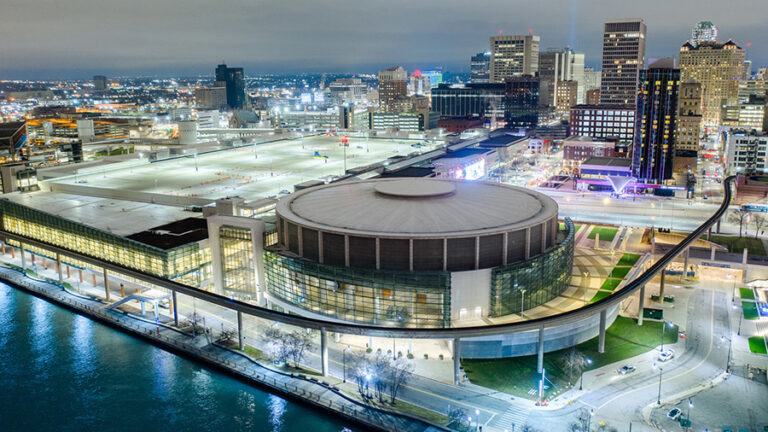
A pharmaceutical representative attends a three-day summit at the Ernest N. Morial Convention Center.
-
The Transition: They move from the sterile convention hall to a boutique hotel in the Garden District on Thursday evening.
-
The Bleisure Outcome: Friday is spent working remotely from a historic café (High-Focus AM) and touring the National WWII Museum (Leisure PM).
-
Failure Mode: Staying in the Central Business District (CBD) the entire time, missing the “vibe shift” that creates true mental recovery.
Scenario 2: The “Mountain-Office” in Salt Lake City
A software engineering manager travels for a quarterly “sync” at the company’s regional office.
-
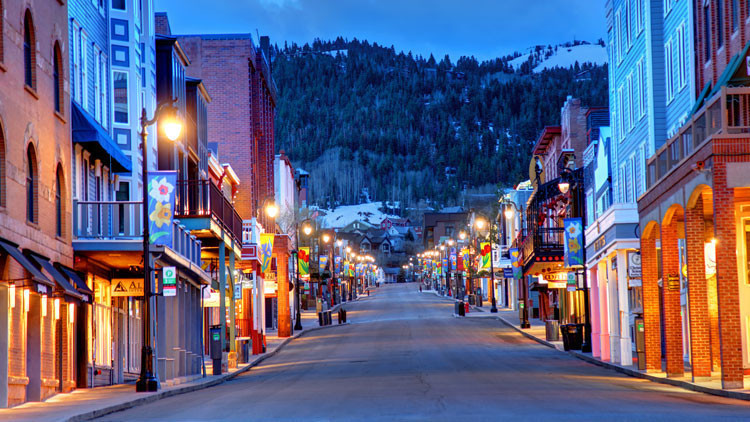
The Transition: They use the “Ski-In/Ski-Out” lodging options in Park City, taking the 35-minute shuttle to the SLC tech corridor for meetings.
-
The Bleisure Outcome: Morning “powder runs” before 10:00 AM meetings. The high-altitude air and physical activity increase cognitive clarity for complex code reviews.
-
Second-Order Effect: The manager returns to the home office with higher morale and lower burnout signals.
Planning, Cost, and Resource Dynamics
The “Bleisure Premium” is the additional cost of extending a trip, often offset by the lack of a personal airfare expense.
Range-Based Table: Daily Cost Variability (2026 Estimates)
| Expense Category | Mid-Market Hub (e.g., Charlotte) | Tier 1 Hub (e.g., NYC/Miami) | Premium Resort (e.g., Scottsdale) |
| Lodging (Per Night) | $220 – $350 | $450 – $750 | $600 – $1,200 |
| Food & Bev (Daily) | $80 – $120 | $150 – $250 | $200 – $400 |
| Activity/Entry Fees | $25 – $50 | $60 – $150 | $150 – $300 |
| Transit (Daily) | $30 (Uber/Public) | $60 (Congestion/Parking) | $100 (Rental/Valet) |
Tools, Strategies, and Support Systems
To maximize a bleisure trip in 2026, the modern professional utilizes a “Blended Tech Stack”:
-
Work-Zone Locators: Apps like WorkChew or Croissant that identify “verified” remote work spots with high-speed Wi-Fi and power outlets in leisure districts.
-
Focus-Mode Hardware: High-end noise-canceling headphones (Bose/Sony) are now considered “safety equipment” for working in public leisure spaces.
-
Expense Separation Software: Tools like Expensify or Navan that automatically toggle between “Corporate” and “Personal” credit cards based on the calendar date.
-
Luggage-as-a-Service (LaaS): Services that store business attire securely while the traveler moves to a “leisure-only” hotel for the weekend.
-
Digital Nomad Insurance: Short-term riders that cover “out-of-office” accidents during the leisure portion of a business trip.
-
AI Itinerary Optimizers: Personal AI agents that sync with local weather, traffic, and “busy-ness” data to suggest the best hours for deep work vs. sightseeing.
Risk Landscape and Failure Modes
Bleisure is not without significant professional and personal risks.
-
The “Optics” Risk: Posting photos of a luxury pool while coworkers are under a deadline at headquarters can lead to “cultural erosion” and resentment.
-
The “Duty of Care” Gray Area: If an employee is injured on a Saturday during a bleisure extension, is the company liable? In 2026, legal precedents are still catching up to this “blended” reality.
-
Cognitive Fragmenting: Attempting to “multitask” work and leisure (e.g., answering emails while on a guided tour) leads to poor performance in both. This results in “Half-Work/Half-Fun,” where neither objective is met.
Governance, Maintenance, and Long-Term Adaptation
Companies must move toward a Formalized Bleisure Governance model to protect both the firm and the employee.
The “3-Pillar” Checklist for Corporate Bleisure Policies:
-
Financial Bright-Lines: Explicitly state that the company pays for the flight “to and from” but the employee pays for all lodging, meals, and transit during “Personal Days.”
-
Productivity Accountability: Require that “Work Days” maintain the same output metrics as at the home office.
-
Risk Waivers: Clear documentation stating that the “Duty of Care” ends at 5:00 PM on the final business day and resumes only during the return flight.
Measurement and Evaluation of Trip Efficacy
How do you know if you’ve chosen the best bleisure destinations in the United States for your specific needs?
-
Leading Indicator: “Planning Joy.” Does the prospect of the trip increase your engagement with the work tasks required before the trip?
-
Lagging Indicator: “Monday Morning Readiness.” Do you return to your primary office feeling “reset,” or do you need a “vacation from your vacation”?
-
Quantitative Signal: “Cost-per-Experience.” Calculating the total personal spend vs. the value of the leisure activities accessed. If you spent $1,000 on a weekend in NYC but only saw a single movie, the “bleisure efficiency” was low.
Common Misconceptions and Oversimplifications
-
“Bleisure is only for Millennials/Gen Z.” Data shows that Gen X executives are the fastest-growing segment of bleisure travelers, leveraging their higher disposable income for ultra-luxe extensions.
-
“It’s cheaper for the company.” It is usually “cost-neutral” for the company, but the value is in the increased retention of high-performing staff.
-
“You need a long weekend.” Even a “Micro-Bleisure” (6 hours of exploration before a red-eye flight) can provide significant mental benefits.
-
“Resort cities are the best.” Often, “Working Cities” (like Philadelphia or Chicago) are better because their “Business” infrastructure (Wi-Fi, transit) is more reliable than a vacation-focused resort.
-
“Wi-Fi is everywhere.” High-quality, secure Wi-Fi is still a luxury. Never assume a “top” destination has the bandwidth for a video-heavy workload without prior verification.
Conclusion: The Future of Fluid Mobility
As we look toward the end of the decade, the best bleisure destinations in the United States will be those that lean into “Functional Beauty.” The cities that win will be the ones that understand the professional traveler is no longer a “visitor” to be exploited, but a “temporary citizen” to be supported.
The synthesis of work and life is the defining challenge of the 2020s. By strategically selecting destinations that offer low transition friction and high recovery value, the modern professional transforms a standard corporate obligation into a powerful tool for personal growth and mental longevity. The “business trip” is dead; long live the “integrated journey.”