Best Convention Cities United States: The 2026 Authority Guide
In the competitive architecture of American commerce, the “convention city” has evolved from a simple logistical backdrop into a strategic instrument of industrial influence. As we navigate 2026, the selection of a host city is no longer merely an exercise in counting hotel rooms or square footage. Instead, it is a high-stakes calculation of “Total Event Efficacy”—a metric that balances attendee psychological safety, the friction of local transit, and the density of sector-specific intellectual capital.
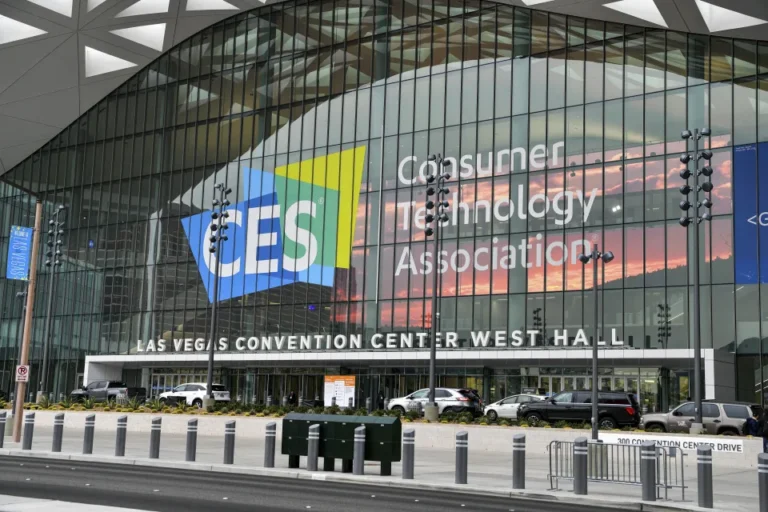
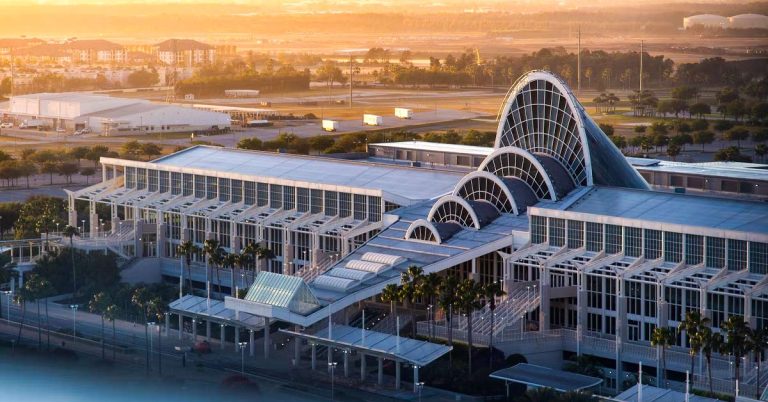
The modern American convention landscape is currently defined by a sharp bifurcation. On one side, the “Mega-Hubs” like Las Vegas and Orlando continue to dominate through sheer scale and hyper-specialized hospitality infrastructure. These cities recognize that in a post-digital age, the primary value of an in-person gathering is the serendipitous “unstructured interaction” that cannot be replicated via screen.
For the corporate planner, the association executive, or the city stakeholder, understanding the nuances of the best convention cities in the United States requires looking past glossy tourism brochures. It necessitates an analytical deep dive into the systemic “Metabolic Rate” of a city, how quickly it can absorb 50,000 visitors, how efficiently its airport processes international delegates, and how effectively its local “Innovation Districts” integrate with the convention floor. This definitive article serves as a master reference for those who view city selection as a foundational component of long-term organizational authority.
Understanding “best convention citiesin the United Statess”
The designation of the best convention cities in the United States is frequently misunderstood as a static ranking of facility size. In reality, “best” is a multidimensional variable that changes based on the event’s specific “Strategic DNA.” A common mistake in the industry is the “Capacity Fallacy”—assuming that because a city like Chicago has the largest convention center (McCormick Place), it is objectively superior for every large-scale event.
A nuanced perspective reveals that a city’s efficacy is determined by its “Friction-to-Flow Ratio.” For instance, a city might offer a world-class venue but suffer from “Transit Fragmentation,” where the distance between the airport, the hotels, and the convention hall creates a significant “Cognitive Tax” on attendees. Conversely, “Compact Hubs” like San Diego or New Orleans excel because they minimize this friction, allowing for “High-Density Networking” within a walkable radius.
Furthermore, we must account for the “Sectoral Gravity” of a city. In 2026, the best city for a biotech summit (Boston/San Francisco) is fundamentally different from the best city for a manufacturing expo (Chicago/Atlanta). The city must act as an “Accelerator” for the event’s content, providing local tours, expert speakers, and a surrounding ecosystem that validates the attendees’ investment. Oversimplification leads planners to choose cities based on “Sun and Fun” alone, often sacrificing the professional gravitas required for high-stakes industry shifts.
Deep Contextual Background: The Evolution of the American Meeting Hub
The American convention city has progressed through three distinct historical eras, leading to the hyper-connected “Poly-Hub” model of 2026.
The “Industrial Landmark” Era (1950s–1980s)
Initially, conventions were localized trade shows held in municipal armories or grand hotels. Cities like Chicago and New York dominated because they were the physical crossroads of American rail and air travel. The venue was a static box; the city was merely the place where the box was located.
The “Hospitality Integration” Era (1990s–2015)
Led by the explosive growth of Las Vegas and Orlando, this era saw the convention center become part of a “Total Destination” strategy. The goal was to eliminate the need for attendees to leave a controlled environment. The “Resort-Convention” hybrid was born, turning meetings into semi-leisure excursions.
The “Experience Economy” Era (2016–Present)
In the current era, the convention has spilled out of the venue and into the city itself. Modern attendees demand “Urban Authenticity.” This has shifted power toward cities that have invested in “Civic Connectivity”—redeveloping riverfronts, creating walkable arts districts, and ensuring that the path from the hotel to the hall is an aesthetic experience rather than a utilitarian chore.
Conceptual Frameworks for City Evaluation
To move beyond superficial rankings, planners should utilize these mental models:
1. The “Absorptive Capacity” Model
This evaluates a city’s ability to handle “Peak Load” without a degradation in service quality. It’s not just about total hotel rooms, but “Room-to-Square-Footage Balance.” If a city has 2 million square feet of expo space but only 10,000 hotel rooms within a 20-minute radius, the resulting “Commute Friction” will lower attendee satisfaction scores.
2. The “Innovation District” Overlay
This model examines how well the convention center is geographically integrated with the city’s local industry. A tech convention in Austin or a healthcare summit in Nashville gains “Semantic Credibility” because the local workforce and startup culture act as a force multiplier for the event’s messaging.
3. The “Liminality” Index
This measures the quality of the spaces between the formal sessions. Top-tier cities prioritize “Third Spaces”—cafes, rooftops, and parks adjacent to the venue—where the real business of the convention (the networking) actually occurs.
Key Categories of Convention Destinations
The 2026 market is segmented into archetypes that serve specific organizational goals.
| Category | Strategic Objective | Representative Cities | Key Trade-off |
| Mega-Hubs | Mass Scale & Logistics | Las Vegas, Orlando | High “Tourist Fatigue” |
| Corporate Legacy | Professional Gravitas | Chicago, Atlanta | Higher operational complexity |
| Innovation Specialists | Startup Energy & Tech | Austin, Denver, Seattle | Rapidly rising costs |
| The “Compact” Elite | Walkability & Bonding | San Diego, New Orleans | Restricted for mega-growth |
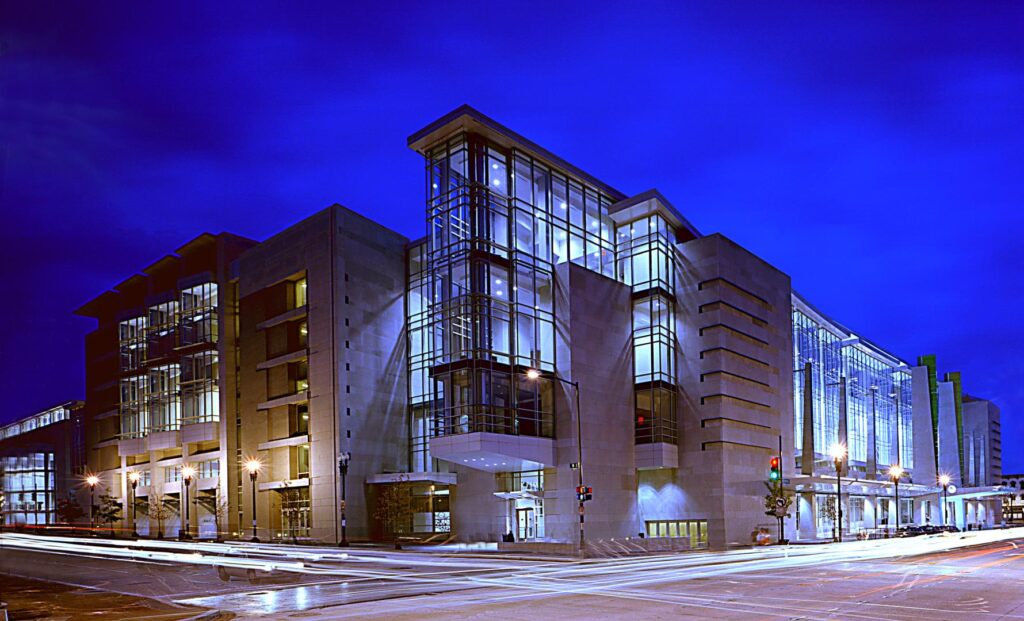
| Policy Epicenters | Advocacy & Governance | Washington D.C. | Stricter security/regulation |
| Emerging Regionalists | Value & Regional Access | Nashville, Indianapolis | Limited international airlift |
Detailed Real-World Scenarios and Decision Points
Scenario 1: The “High-Growth Tech” Launch
A Silicon Valley firm wants to move its 10,000-person developer conference to the East Coast.
-
Decision: Atlanta vs. Boston.
-
Logic: While Boston has the sectoral gravity, Atlanta’s Hartsfield-Jackson airport provides superior “Global Reach” for international devs. Atlanta’s recent investments in the “Gulch” redevelopment have created a tech-forward urban core that mimics the Bay Area’s energy at a lower price point.
-
Failure Mode: Choosing Boston but failing to account for the lack of hotel block availability during peak university commencement season.
Scenario 2: The “Association Recovery” Pivot
A national medical association is seeing a decline in membership engagement.
-
Decision: Nashville vs. Las Vegas.
-
Logic: Las Vegas is the default, but Nashville offers the “Cradle of Healthcare” narrative. By hosting in Nashville, the association can leverage local hospital systems for site tours, revitalizing the educational value of the trip.
-
Failure Mode: Selecting Nashville without a “Drought-Resistant” transit plan, as the city can struggle with traffic during rain or heavy snow.
Planning, Cost, and Resource Dynamics
The “Cost of a City” is far more complex than the daily room rate. It involves “Direct Spend” and “Social Capital Spend.”
Range-Based Table: Daily Attendee Spend (2026 Estimates)
| Tier | Venue Profile | Est. Daily Spend (Per Pax) | Capacity Focus |
| Tier 1 (Premium) | NYC, SF, Chicago | $650 – $950 | Global Influence |
| Tier 2 (Growth) | Austin, San Diego, DC | $450 – $700 | Lifestyle & Tech |
| Tier 3 (Value) | Indy, Dallas, Orlando | $300 – $500 | Efficiency & Scale |
Note: These ranges include lodging, F&B, and local ground transport.
Tools, Strategies, and Support Systems
Successfully executing in the best convention cities united states requires a “City-Stack” of support systems:
-
CVB Partnership (Convention & Visitors Bureau): Moving beyond “brochure requests” to utilizing CVBs as “Governmental Liaisons” for permitting and local security.
-
Micromobility Integration: Cities that allow for seamless e-scooter or dedicated bike-lane access between hotels and the hall reduce the burden on shuttle systems.
-
Local “Influencer” Mapping: Identifying local CEOs and academic leaders to serve as “Host Committee” members, grounding the event in the city’s reality.
-
Tarmac-to-Table Logistics: Selecting venues that have “Dedicated Airport Lanes”—shuttles or light rail that bypasses general traffic.
-
Sustainability Audits: Cities like Denver and Seattle provide “Green Power” offsets for large events, which is increasingly a requirement for ESG-focused corporations.
-
“Dark Fiber” Capacity: Ensuring the city’s convention center has redundant, high-speed fiber paths to support the 2026 standard for hybrid-conferencing.
Risk Landscape and Failure Modes
Convention planning is inherently a study in “Compounding Hazards.”
-
The “Poly-Crisis” Lockout: A city that relies on a single transit artery (e.g., a tunnel or bridge) creates a “Single Point of Failure.” If a protest or accident occurs, the entire event’s schedule collapses.
-
Access Inflation: When a city becomes too popular (the “Austin Effect”), the cost of secondary services like catering and AV labor can skyrocket faster than the inflation rate, leading to mid-contract budget blowouts.
-
The “Ghost Hub” Syndrome: Some cities have large venues but “dead” downtowns. This leads to attendees retreating to their rooms immediately after sessions, killing the networking ROI.
Governance and Long-Term Adaptation
How should a corporation govern its city-selection cycle?
-
The “Three-Year Rotation”: Rotating through different city tiers (Mega-Hub, Specialist, Value) to keep the “Attendee Aesthetic” fresh and prevent travel burnout.
-
The “Social Impact” Review: Evaluating whether the event’s presence in the city is leaving a positive “Legacy Footprint” (e.g., donating excess food to local shelters, hosting a student day).
-
Post-Event Sentiment Mapping: Using geofenced data to see where attendees actually went. If they spent 80% of their time outside the convention district, the district is failing its “Absorptive” mission.
Measurement, Tracking, and Evaluation
Planners must distinguish between “Vanity Metrics” and “City Efficacy.”
-
Leading Indicator: “Pre-Registration Velocity.” Does the mere announcement of the city trigger an immediate spike in sign-ups? (e.g., the “San Diego Factor”).
-
Lagging Indicator: “Attendee Retention.” Do people who attended the event in City A return when it is held in City B?
-
Qualitative Signal: “Serendipitous Mention Density.” How many times do attendees mention a “chance encounter” at a local cafe in their post-event surveys?
Common Misconceptions and Oversimplifications
-
“Vegas is always cheaper.” While room rates can be low, the “incremental costs” (resort fees, high-end F&B, unions) often make it one of the most expensive.
-
“Airlift is the only thing that matters.” A city with a great airport but no walkable downtown (e.g., Atlanta in some configurations) can lead to a “fragmented” attendee experience.
-
“Large centers are better for large groups.” A 5,000-person group can “get lost” in a 2-million-square-foot center. It is often better to “be the biggest fish” in a mid-sized city.
-
“Newer is always better.” Some of the most effective convention hubs are historic buildings that have been “Smart-Retrofit” with 2026-level tech.
-
“The CVB works for you.” Remember, the CVB works for the city; their goal is to fill hotels. Planners must conduct independent audits of transit and labor conditions.
Conclusion: The Future of Urban Gathering
The quest for the best convention cities united states is ultimately a search for “Human Synchronicity.” In 2026, the city is no longer a passive container for people; it is an active participant in the exchange of ideas. The cities that will thrive in the coming decade are those that view their convention infrastructure as a “Civic Ecosystem”—investing not just in steel and concrete, but in the “Soft Infrastructure” of safety, walkability, and cultural vibrancy.
For the modern leader, selecting a convention city is an act of “Curation.” It is a signal to your industry about the values you hold and the future you are trying to build. Whether you choose the massive scale of the Nevada desert or the coastal intimacy of Southern California, the goal remains the same: to create a space where the world’s most talented people can, for a few days, forget the distance of the digital world and remember the power of being in the same room.