Top Business Class Lounges USA: The 2026 Definitive Strategy Guide
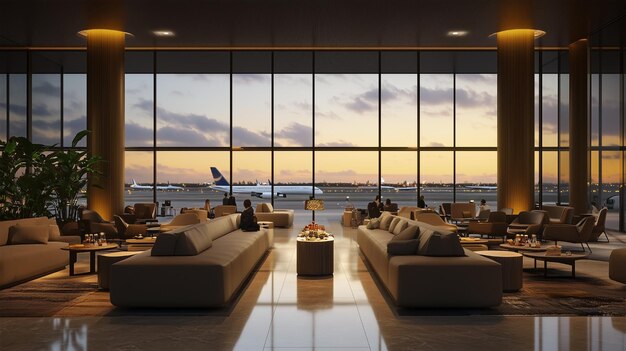
In the competitive architecture of modern aviation, the “liminal space” of the airport terminal has undergone a radical metamorphosis. What was once a utilitarian environment defined by plastic seating and frantic gate announcements has, in 2026, fractured into two distinct realities: the chaotic public concourse and the highly curated ecosystem of the top business class lounges usa. This evolution is not merely an upgrade in furniture; it represents a fundamental shift in the economics of travel, where time is treated as a tradeable commodity and privacy has become the ultimate luxury.
The current landscape of American airport hospitality is defined by a triad of competing interests: legacy airlines defending their premium cabin moats, financial institutions leveraging lounge access to anchor $600+ annual fee credit cards, and independent operators filling the “access gap” for the modern traveler. As terminal congestion reaches historic peaks, these lounges have transitioned from being optional perks into essential “Focus-Recovery-Zones.” For the executive or the affluent leisure traveler, the lounge is the primary tool for mitigating the “cognitive tax” of air travel—the mental exhaustion derived from navigating security, noise, and unpredictability.
Understanding the hierarchy of the top business class lounges usa requires a departure from the “Priority Pass” generalizations of the past decade. The market in 2026 is hyper-segmented. We now see the rise of “lounges within lounges,” biometric-only entry paths, and “tarmac-to-table” service models that bypass the traditional terminal entirely. This pillar article provides a definitive, systemic audit of the US lounge landscape, offering the deep contextual background and decision-making frameworks necessary to navigate an industry that is currently at its most complex and exclusionary peak.
Understanding “top business class lounges usa”
To accurately assess the top business class lounges in the USA landscape, one must first dismantle the myth that “premium” is a universal standard. In the 2026 domestic market, the term “business class lounge” is applied to a vast range of environments, from standard membership clubs with packaged snacks to ultra-exclusive enclaves like the Delta One or United Polaris suites. The primary risk for the high-end traveler is “Experience Dilution”—paying a premium for access only to find a space that is as crowded and loud as the gate it was meant to replace.
A multi-perspective view reveals that the “Value of the Lounge” is relative to the “Friction of the Airport.” At a hub like JFK or LAX, a lounge with a dedicated TSA PreCheck lane and shower suites is worth significantly more than a similarly appointed lounge in a smaller, quieter airport. The oversimplification often seen in travel media is the ranking of lounges based on aesthetics alone. While decor matters, the true measure is “Operational Utility”—the ability to solve a traveler’s specific problems, such as a missed connection, a dying device, or the need for a high-stakes video call.
We must also distinguish between “Credit Card Lounges” and “Airline-Flagship Lounges.” The former (Amex Centurion, Chase Sapphire, Capital One) are designed as brand-loyalty billboards; they are often beautiful but frequently suffer from “Access Inflation,” leading to the infamous “lounge lines” seen at major hubs. The latter are “Closed-Loop Ecosystems” reserved strictly for those flying in specific cabins. Understanding this distinction is the difference between a relaxing pre-flight meal and a forty-minute wait on a digital queue.
Deep Contextual Background: The Premiumization of Transit
The history of the American airport lounge is a tale of strategic exclusion. It began in the late 1930s with American Airlines’ “Admirals Club” at LaGuardia—an invitation-only space for celebrities and high-value customers. For decades, the “club” was a dark, wood-paneled room where the value proposition was simply “not being in the terminal.”
The Three Waves of Lounge Evolution
-
The Membership Era (1970s–2010): Lounges were primarily airline-owned and accessed via paid annual memberships. The focus was on “The Road Warrior”—business travelers who needed a desk and a landline.
-
The Credit Card Disruption (2011–2022): The launch of the American Express Centurion Lounge network broke the airline monopoly. It introduced “Retail-Style Luxury” (chef-curated menus, cocktail programs) to the masses, provided they held a specific piece of metal.
-
The Segmented Era (2023–2026): Airlines, seeing their lounges overrun by credit card holders, began building “Super-Premium” tiers. This led to the birth of the “Delta One” lounges and the expansion of “United Polaris,” which are physically and legally inaccessible to most credit card holders.
This systemic evolution has created a “bifurcated market.” On one side, we have the “Mass-Premium” lounges struggling with capacity management. On the other hand, we have “Ultra-Exclusives” where the goal is to maintain a specific “Guest-to-Square-Foot” ratio that guarantees silence and service speed.
Conceptual Frameworks and Mental Models
To navigate the top business class lounges usa effectively, professionals should use the following mental models:
1. The “Liminality-to-Focus” Ratio
This framework measures how quickly a lounge can transition a traveler from the “chaos of movement” to “deep focus.” A lounge that requires a long check-in process or has a high-decibel background noise fails this ratio. High-performing lounges use “Acoustic Zoning” (library areas vs. bar areas) to maximize this ratio.
2. The “Access Arbitrage” Model
This involves calculating the lowest cost of entry relative to the highest level of luxury. For example, a traveler might hold a premium credit card that provides broad access but use “Single-Use Passes” for a Flagship lounge during a particularly long layover. This model treats lounge access as an “ancillary investment” rather than a fixed amenity.
3. The “Recovery-to-Transit” Framework
For long-haul or multi-segment travelers, the lounge is a “Biologic Re-set Station.” This model evaluates a lounge based on “Transit Recovery Assets”: shower pressure, nap-pod availability, and the nutritional density of the food. If a lounge only offers “heavy” food and no place to lie down, its recovery value is low.
Key Categories of American Lounge Hubs
The 2026 market is divided into six functional archetypes, each with distinct trade-offs:
| Category | Access Primary Driver | Best Example (2026) | Primary Trade-off |
| Airline Flagship | International Premium Ticket | United Polaris (SFO) | Extremely narrow access rules |
| Issuer Flagship | Brand-Specific Credit Card | Capital One Lounge (IAD) | Can suffer from severe crowding |
| The “Silent” Tier | Specific Cabin (No Guests) | Delta One Lounge (JFK) | Usually limited to long-haul only |
| Independent Hubs | Priority Pass / Pay-per-use | Chase Sapphire Lounge (BOS) | Variable quality; often “Standard.” |
| Private Terminals | Annual Membership / Fee | PS (LAX/ATL) | High direct cost ($1,000+ per visit) |
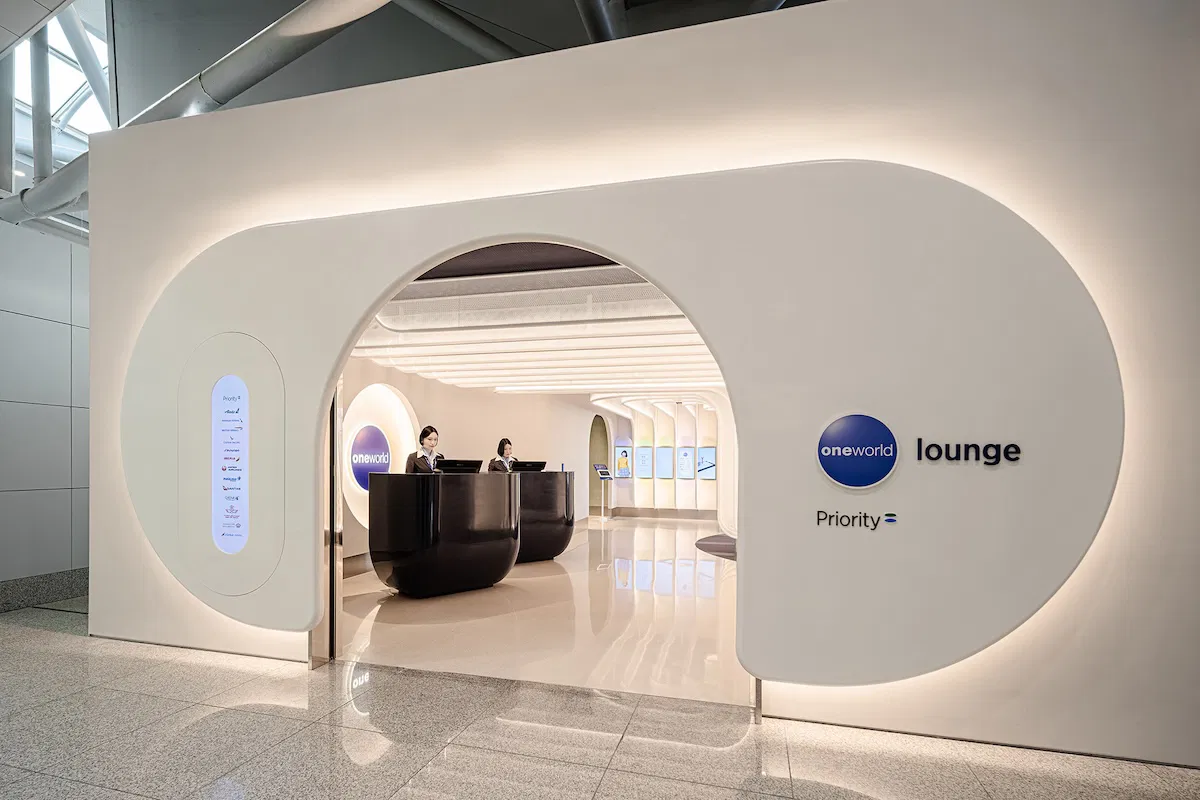
| Alliance Lounges | Status with Partner Airlines | OneWorld Lounge (LAX) | Logic for entry can be confusing |
Decision Logic: The “Lounge-Trip Fit”
When selecting from the top business class lounges usa, context is everything. If you have a two-hour layover, a Centurion Lounge with its rapid buffet is ideal. If you have a six-hour delay, paying for a “Private Suite” at a terminal like PS—where you can sleep in a soundproof room and be driven to your plane—becomes a rational investment in your next day’s productivity.
Detailed Real-World Scenarios
Scenario 1: The “Tight Connection” Strategy at DFW
A traveler has 45 minutes between flights at Dallas-Fort Worth.
-
Decision Point: Should they attempt to enter the Centurion Lounge or the Capital One Lounge?
-
Analysis: The Capital One Lounge at DFW features a “Grab-and-Go” station specifically designed for this scenario. Entering a traditional lounge for 15 minutes is a net loss in time; using a “Transit-Optimized” lounge provides value without the friction of a formal sit-down meal.
Scenario 2: The “International Buffer” at JFK
A traveler is flying JFK to London in Business Class.
-
Decision Point: Accessing the American Airlines Flagship First Dining vs. the new Delta One Lounge.
-
Analysis: If the goal is a “Restaurant-Grade” meal before sleeping on the plane, Flagship First Dining (sit-down, multi-course) is superior. If the goal is “Total Wellness” (showers, zero-gravity chairs, spa treatments), the Delta One Lounge is the 2026 gold standard.
Planning, Cost, and Resource Dynamics
The “Cost of Access” has shifted from a flat membership fee to a “Bundled Ecosystem.”
Range-Based Table: Access Costs (2026 Estimates)
| Access Method | Annual Fixed Cost | Per-Visit Cost | Hidden Cost (Opportunity/Time) |
| Premium Credit Card | $395 – $895 | $0 (Limited) | Time spent in queues/waitlists |
| Airline Membership | $650 – $850 | $0 | Usually lower-quality F&B |
| Flagship Cabin Ticket | N/A (Included) | $1,200 – $8,000 | Inflexibility of flight choice |
| Private Terminal (PS) | $4,850 (Member) | $750 – $1,250 | Requires an earlier airport arrival |
Tools, Strategies, and Support Systems
To maximize the efficacy of top business class lounges in the USA, one must employ a “Digital Lounge Stack”:
-
Occupancy Monitors: Apps like the Fly Delta app or the United app now provide real-time “Crowd Meters” and occupancy tracking.
-
Pre-Registration Apps: Using card issuer apps (Amex/Chase) to secure a spot on the waitlist before physically arriving at the terminal.
-
Lounge-to-Gate Navigation: Digital maps that calculate the exact walking time from the lounge to the gate, accounting for current terminal congestion.
-
Shower Reservation Systems: Booking your shower suite the moment you enter the lounge via a QR code or in-lounge device to avoid the 2-hour waitlist.
-
Biometric Entry: Enrolling in facial-recognition entry programs (like Delta’s Sky Way), bypassing the manual boarding pass scan for faster entry.
-
Digital “Clean-Room” Connectivity: Using VPNs and dedicated “work nooks” provided by lounges to ensure security on public Wi-Fi networks.
Risk Landscape and Failure Modes
The “Lounge-Industrial Complex” carries several compounding risks for the traveler:
-
The “Queue Contagion”: If one major lounge in a terminal closes for renovation, all other lounges experience immediate “Capacity Failure,” leading to 60+ minute wait times.
-
The “Productivity Paradox”: The comfort of a lounge can lead to “Attention Drift,” causing travelers to miss boarding announcements that are often not broadcast inside the lounge.
-
“Access Devaluation”: Banks and airlines frequently change access rules with little notice. A card that provided “Unlimited Guests” in 2025 may require a $75 fee per guest in 2026.
Governance, Maintenance, and Long-Term Adaptation
For organizations or high-frequency travelers, maintaining “Lounge Portfolios” requires a structured review cycle.
The “Lounge Audit” Checklist:
-
Bi-Annual Fee Analysis: Does the $895 annual fee still provide a positive “Net-Value” based on the number of visits?
-
Hub-Route Alignment: Does your primary lounge network actually have a presence in the 5 airports you visit most frequently?
-
Guest Policy Monitoring: With 2026 being a year of “Guest Rule Tightening,” travelers must verify current guest costs before every trip to avoid embarrassment at the front desk.
Measurement, Tracking, and Evaluation
How do you know if your lounge strategy is working?
-
Quantitative Signal: “Cost-per-Quiet-Hour.” Divide your total annual fees by the number of hours you spent in a focused, productive environment. If it’s over $50/hour, your strategy is inefficient.
-
Qualitative Signal: “Post-Trip Fatigue Score.” Do you feel significantly more “capable” on the day of arrival when you use a high-end lounge vs. sitting in the terminal?
-
Documentation Example: A simple spreadsheet tracking “Time-to-Seat” for your top 5 lounges. If a specific lounge consistently has a 30-minute wait, it should be removed from your “Target Hubs.”
Common Misconceptions and Oversimplifications
-
“All lounges have free alcohol.” Many basic lounges in the US charge for “Premium” spirits; only “Flagship” lounges are typically truly all-inclusive.
-
“Status is better than a Credit Card.” In 2026, many “Gold” or “Platinum” status levels don’t grant domestic lounge access without a qualifying international flight.
-
“Lounges are always quieter than the terminal.” During peak hours, the terminal’s “Quiet Zones” are often quieter than an overcrowded Sky Club.
-
“Priority Pass gets you into everything.” Priority Pass is increasingly losing its best US lounges to “Issuer Exclusive” models.
-
“You can stay as long as you want.” Most US lounges now enforce a “3-Hour Before Flight” entry rule (or 5 hours for connections) to manage capacity.
-
“Domestic First Class gets you lounge access.” On most US carriers, a standard domestic First Class ticket provides zero lounge access.
Conclusion: The Future of the Ground Experience
The landscape of top business class lounges usa is currently in a state of “Equilibrium of Exclusion.” As long as the public terminal remains a high-stress environment, the demand for these “sanctuary spaces” will continue to outpace supply. The future of this industry lies in “Personalized Frictionlessness”—where the lounge is no longer a destination, but a seamless transition point that anticipates the traveler’s needs for sleep, food, and security.
For the modern professional, the lounge is not a luxury; it is a tactical component of a high-performance lifestyle. By applying the frameworks of “Access Arbitrage” and “Transit Recovery,” the traveler can reclaim the hours previously lost to terminal fatigue. The goal is no longer just “getting there,” but arriving in a state of readiness that only a properly managed ground experience can provide.