American Business Travel Ideas: The 2026 Strategy & Efficacy Guide
In the contemporary economic landscape of 2026, the movement of professional capital has transitioned from a routine logistical necessity into a sophisticated instrument of strategic influence. As decentralized workforces become the standard, the physical gathering, whether for a high-stakes negotiation, a regional audit, or a “deep-work” executive retreat, must now carry a significantly higher “Return on Presence” to justify its environmental and financial costs. This evolution has forced a re-evaluation of how domestic transit is structured, moving away from standardized hub-and-spoke itineraries toward highly customized, result-oriented journeys.
The American market, characterized by its vast geography and diverse regional industrial clusters, presents a unique challenge for the corporate traveler. Selecting the right venue or itinerary is no longer just about proximity to an airport; it involves a complex calculation of “ecosystem density.” A trip to the Research Triangle in North Carolina serves a different strategic purpose than a summit in the Silicon Slopes of Utah. The modern traveler must navigate these nuances while managing the “friction of mobility”—the compounding exhaustion of travel that can degrade executive performance if not properly mitigated.
Furthermore, the rise of “Bleisure” (business-leisure) integration is not merely a lifestyle trend but a response to the need for sustainable high-performance. By extending a stay to incorporate regional cultural immersion or “recovery time,” professionals are finding they can maintain a higher velocity of travel throughout the fiscal year. However, this integration requires a sophisticated governance framework to ensure that the primary business objectives remain at the forefront.
This definitive reference article serves as a systemic audit of the current professional transit landscape. It is designed for those who view travel as a foundational component of organizational authority, providing the conceptual frameworks, cost dynamics, and risk landscapes required to optimize American business travel ideas for the next decade of American commerce.
Understanding “American Business Travel Ideas”

The designation of American business travel ideas is frequently reduced to a list of destination recommendations or flight-booking hacks. In a professional context, this is a dangerous oversimplification. A “business travel idea” is actually a strategic movement model; it is a specific configuration of geography, timing, and infrastructure designed to produce a professional outcome that cannot be achieved digitally. When we analyze these ideas through a multi-perspective lens, we see that they are less about where one goes and more about how the environment facilitates “Industrial Synthesis.”
A common misunderstanding in the industry is the “Proximity Fallacy”—the belief that being physically close to a partner or client is the sole metric of a successful trip. In 2026, proximity is secondary to “Environmental Efficacy.” For instance, an idea for a regional summit in a “Secondary Hub” like Columbus, Ohio, might be superior to a New York City meeting because the lower “urban noise” and higher “service-to-guest ratio” allow for deeper concentration and fewer external distractions.
Furthermore, we must account for “Transit Resilience.” A business travel idea that relies on a single, fragile transit link (like a small regional airport with limited daily flights) carries a higher “Operational Risk” than one centered in a “Multi-Modal Hub” like Atlanta or Chicago. Planners must evaluate ideas not just on their aesthetic or cultural appeal, but on their ability to absorb “Logistical Shocks” without compromising the mission’s timeline.
Contextual Background: The Evolution of Professional Mobility
The American business travel landscape has transitioned through three distinct “Eras of Connectivity.”
The Era of “The Road Warrior” (1960s–1990s)
Initially, business travel was an exercise in sheer endurance. Success was measured by “face time” and the volume of physical interactions. The infrastructure was utilitarian—standardized hotels, airport lounges as exclusive smoking rooms, and a heavy reliance on the hub-and-spoke airline model. The goal was ubiquitous presence.
The Era of “Digital Integration” (2000s–2019)
With the advent of high-speed connectivity, travel began to compete with virtual presence. This period saw the rise of the “Mega-Convention” and the “Global Hub.” Travelers used mobile technology to maintain office productivity while in transit, but this led to the “Burnout Crisis,” as the boundaries between work and travel dissolved completely.
The Era of “Strategic Presence” (2023–Present)
In the current era, travel is selective. Every trip is scrutinized for its “Contribution Margin” to the bottom line. This has led to the emergence of “Satellite Summits”—smaller, more intimate gatherings in specialized regional centers—and a focus on “Wellness-First Mobility.” The destination is no longer just a place to sleep; it is a curated “Cognitive Sanctuary” designed to maximize intellectual output.
Conceptual Frameworks and Mental Models
To evaluate the validity of various American business travel ideas, planners should utilize these three mental models:
1. The “Friction-to-Flow” Ratio
This framework measures the amount of energy spent navigating the travel process versus the energy spent on the professional objective. An ideal travel idea minimizes “Logistical Friction” (security, transfers, check-ins) to maximize “Professional Flow” (negotiations, creative sessions, deep work).
2. The “Cognitive Insulation” Model
This model suggests that the value of a travel destination is proportional to its ability to insulate the traveler from daily operational distractions. If a trip to a nearby city doesn’t provide enough “mental distance” from the home office’s routine demands, the “Strategic Yield” of the trip remains low.
3. The “Semantic Density” Framework
This evaluates the “meaning-per-hour” of an itinerary. High-density travel ideas focus on “High-Leverage Interactions”—events where a single conversation could pivot a quarterly strategy. Low-density travel (routine check-ins) is increasingly being relegated to virtual formats.
Key Categories of Business Travel Variations
Professional movement in America is no longer a monolith. It can be categorized into six strategic archetypes, each with distinct trade-offs:
| Archetype | Strategic Objective | Representative Destinations | Key Trade-off |
| The Innovation Enclave | Networking & Talent Sourcing | Austin, TX; Cambridge, MA | High seasonal costs; “Tourist Fatigue.” |
| The Governance Hub | Policy & Regulation | Washington, D.C.; Sacramento, CA | Extreme security friction; high formality |
| The Industrial Heart | Operations & Supply Chain | Chicago, IL; Detroit, MI | Variable weather risks; logistical complexity |
| The Recovery Retreat | Executive Wellness & Strategy | Sedona, AZ; Napa Valley, CA | Lower accessibility; high “Luxury Tax.” |
| The Gateway Hub | International Connectivity | Miami, FL; Los Angeles, CA | Significant traffic latency; linguistic diversity |
| The Secondary Specialist | Focused Deep-Work | Indianapolis, IN; Nashville, TN | Limited international airlift |
Decision Logic: The “Mission-to-Category” Fit
When selecting an archetype, the decision should be driven by the “Social Density” required. If the mission requires high “Collision Probability” (meeting new partners), an Innovation Enclave is essential. If the mission requires “Deep Strategy Consolidation,” a Secondary Specialist or Recovery Retreat provides the necessary quietude.
Detailed Real-World Scenarios and Decision Logic
Scenario 1: The “Distal” Regional Audit
A retail executive needs to visit four distribution centers in the Midwest within 72 hours.
-
The Traditional Approach: Flying into a hub and renting a car.
-
The Optimized Idea: Using a “Regional Circuit” model—flying into a secondary airport like Columbus (CMH) and utilizing a dedicated chauffeur service for a three-day loop.
-
Failure Mode: Attempting to use rideshare in rural areas, leading to significant delays and missed appointments.
Scenario 2: The “High-Stakes Acquisition” Retreat
Two leadership teams need to finalize a merger without media scrutiny.
-
The Traditional Approach: A high-end hotel in New York or London.
-
The Strategic Idea: A “Neutral Ground” retreat in a private estate in the Hudson Valley.
-
Second-Order Effect: The isolated environment forces “Bonding Density” that hotel ballrooms cannot replicate, potentially smoothing out final-stage negotiation friction.
Planning, Cost, and Resource Dynamics
The cost of American business travel has evolved from a linear “Flight + Hotel” model to a “Total Resource Consumption” model. This includes direct spend, the opportunity cost of the traveler’s time, and the “Recovery Cost” post-trip.
Range-Based Table: Daily Attendee Spend (2026 Estimates)
| Tier | Category | Est. Daily Spend (Per Pax) | Dominant Factor |
| Tier 1 (Premium) | NYC, SF, DC | $850 – $1,300 | High ADR & Mandatory Gratuities |
| Tier 2 (Growth) | Austin, Nashville, Miami | $550 – $800 | Surging demand for “Lifestyle” venues |
| Tier 3 (Value) | Indy, Dallas, St. Louis | $350 – $500 | Competitive hospitality inventory |
Note: These ranges include premium lodging, high-end F&B, and local chauffeured ground transport.
Tools, Strategies, and Support Systems
Successful execution of American business travel ideas requires a specialized “Mobility Stack”:
-
AI-Integrated Flight Monitoring: Beyond simple delay alerts, tools that automatically rebook the entire itinerary (hotel, car, meetings) if a primary flight is canceled.
-
Biometric Identity Rails: Utilizing CLEAR and TSA PreCheck not as “perks” but as essential time-management tools.
-
VPN & Hardware Security: In 2026, “Cyber-Hardened” travel routers are required for all professional movement to prevent IP theft in public hubs.
-
Chauffeured Logistics: Moving away from self-driving to professional ground transport to turn “Commute Time” into “Productive Work Blocks.”
-
Health Optimization Apps: Using circadian-rhythm management tools (like Timeshifter) to eliminate jet lag before the first meeting.
-
Corporate Concierge Partnerships: Utilizing “boots on the ground” services for local permitting, secure couriers, and high-end F&B sourcing.
Risk Landscape and Failure Modes
The landscape of travel is inherently volatile. Professionals must categorize risks into “Sovereign,” “Systemic,” and “Personal.”
-
The “Connectivity Lockout”: Depending on a single cloud service for all travel documents. If the region experiences a localized outage, the traveler is “logistically paralyzed.”
-
The “Service Degradation” Trap: Booking based on pre-pandemic reputations. Many Tier-1 hotels have reduced staffing levels, leading to “Executive Friction” (slow check-ins, poor room service).
-
Compounding Delays: A 30-minute flight delay in a hub like ORD can lead to a “Cascading Failure” for the entire week’s schedule. Resilience requires 20% “Buffer Time” in all itineraries.
Governance, Maintenance, and Long-Term Adaptation
Organizations must treat their “Travel Portfolio” with the same rigor as their “Investment Portfolio.”
The “Travel Governance” Checklist:
-
Review Cycle: Quarterly audits of “Travel ROI”—did the trip to Phoenix result in the projected contract?
-
Monitoring: Tracking “Traveler Burnout” through biometric signals or post-trip surveys.
-
Adjustment Triggers: If a specific city consistently produces “Logistical Friction” (e.g., rising crime or airport inefficiency), it must be removed from the “Preferred Destination” list.
Measurement, Tracking, and Evaluation
How do we measure the success of American business travel ideas? We look at “Leading” and “Lagging” indicators.
-
Leading Indicator: “Meeting Density”—the number of high-value interactions per 24-hour period.
-
Lagging Indicator: “Contract Velocity”—the speed at which deals move from “Initial Meeting” to “Execution” after a physical visit.
-
Qualitative Signal: “Attendee Sentiment”—do the participants feel “Empowered” or “Depleted” after the journey?
Common Misconceptions and Oversimplifications
-
“Cheaper is Better:” Lowering the “Direct Spend” often increases the “Friction Cost,” leading to lower performance.
-
“Status Matters Most:” Loyalty points are a byproduct, not a goal. Choosing a sub-optimal airline just for “status” is a strategic error.
-
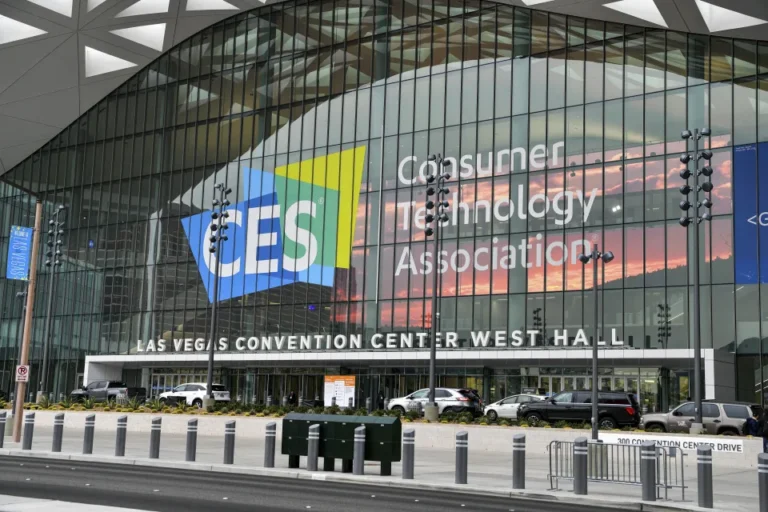
“Vegas is Only for Parties:” Las Vegas has some of the highest “Infrastructure Efficacy” in the US; ignoring it for serious business is an oversimplification.
-
“Bleisure is a Distraction:” When managed correctly, “Bleisure” is a sustainability tool that prevents executive turnover.
-
“Tech Solves Everything:” Digital tools assist, but “Industrial Intuition”—knowing when to ignore the GPS or the booking app—remains a human requirement.
-
“All Business Travel is Tax Deductible:” Governance must ensure compliance with 2026 tax codes regarding the “Personal vs. Professional” split in multi-purpose trips.
Ethical, Practical, or Contextual Considerations
As we look toward 2030, the “Carbon Debt” of business travel is a primary ethical consideration. The best American business travel ideas are those that incorporate “Sustainability Efficacy,” optimizing itineraries to reduce the total number of legs and choosing “Green-Certified” venues. Practically, this means moving toward “High-Yield Long Stays” rather than “Frequent Short Bursts.”
Conclusion: The Future of Convergence
The future of professional mobility in America is not about “traveling more,” but about “traveling better.” The cities and strategies that define the next decade will be those that prioritize “Human Synchronicity”—the rare and valuable moments when the right people are in the right room, unburdened by the friction of the journey.
In 2026, the American business travel ideas that will survive the test of time are those that treat the traveler not as a passenger, but as a strategic asset. By applying the frameworks of “Cognitive Insulation” and “Semantic Density,” organizations can transform their travel budget from a cost center into a powerful engine for industrial influence and creative breakthrough.